You Paid $50 for Four Cameras. Does Insurance Pay $50, or What They're Worth?
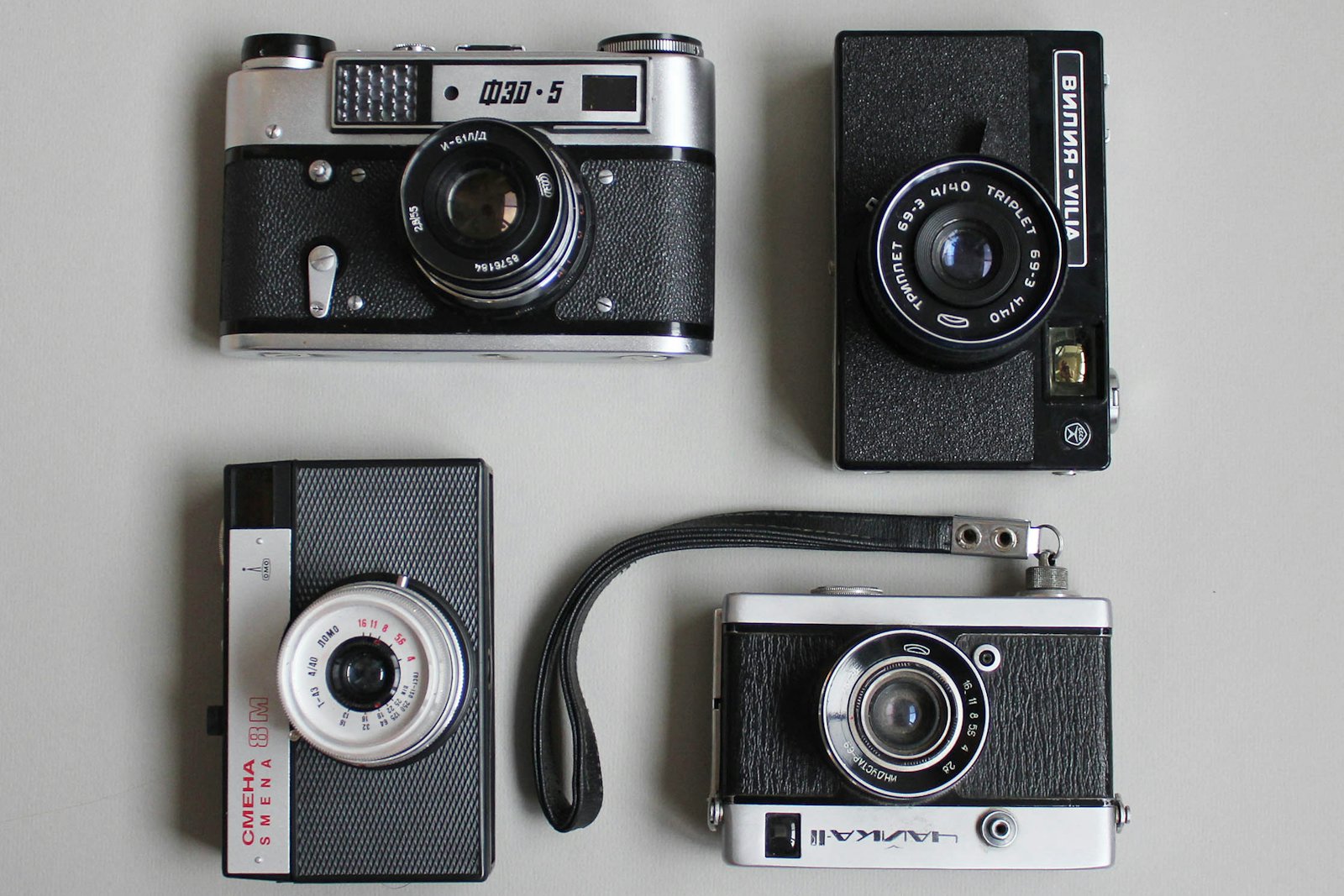
u/Pale_Ad2980 walked out of a garage sale in the Dallas area with a Canon AE-1 Program, a Pentax Super ME, a Minolta 5000, a Nikon EM, a handful of lenses, a couple of camera bags, and a collection of the complete works of William Shakespeare. The total was $50. The photo of the haul on r/Cameras drew 251 upvotes and 86 comments, and the thread's verdict arrived immediately: the Canon alone was worth the fifty, and one commenter reckoned the lens by itself would have been.
Nobody in 86 comments raised insurance, which is fair enough on a $50 purchase. But later in the thread the owner let slip the number that makes it a real question: "my collection of cameras alone is probably two or $3000 and I've probably only spent $350." That is a collection worth several thousand dollars with a cost basis under four hundred, and every policy that could cover it has to answer one question first. Which number is it insuring?
The short version:
- For the first 30 days, one filed form pays the lesser of the two. USAA's Valuable Personal Property contract covers newly acquired property at "the market cash value of the item or the amount you paid for it, whichever is less."
- That same clause treats a gifted camera better than a bargain one. Property acquired by any means other than purchase is paid at market cash value, with no "whichever is less" attached.
- PPA PhotoCare caps payouts at original purchase price, permanently, which on a $12.50 body is a $12.50 payout.
- Once the gear is properly scheduled, what you paid stops mattering. USAA's Loss Settlement pays replacement cost with no deduction for depreciation, capped at the limit you chose.
- The bodies that already don't work are not insurable. "Mechanical or electrical breakdown or failure" is an excluded cause of loss, and a policy only responds to loss "that occurs during the policy period."
What Does a Policy Pay for a Camera You Bought for $12.50?
Anywhere from $12.50 to full current market value, and the deciding factor is which clause your policy settles under rather than anything about the camera. Split $50 across four bodies and the cost basis is $12.50 each, before you allocate a cent to the lenses or the bags. Three published documents answer that same loss three incompatible ways.
PPA's equipment insurance benefit page is the bluntest. Its replacement basis is full replacement cost capped at the item's original purchase price, and the page is explicit that buying used means your payout reflects what you paid rather than current retail. For gear acquired at retail that cap is close to harmless. For a garage sale haul it is the entire ballgame, because the whole point of the purchase was that the price bore no relation to the value. We covered the rest of that program's structure in PPA membership as secondary coverage.
State Farm's Personal Articles Policy page goes the other way, promising to pay "the cost to repair or replace your personal property, without deduction for depreciation up to the applicable limit." The operative words are "applicable limit," which is the figure you put on the schedule when you added the camera, not the figure on a receipt you may not have. Our State Farm write-up has the business-use caveat that comes with it.
USAA's contract is the one we can read in full, because the filed form VPPFCSA (01-26) is published. Its answer depends entirely on timing, and that is the part worth knowing before you go to the next sale.
The 30-Day Window Where Only What You Paid Counts
In the gap between buying a camera and reporting it to your insurer, what you paid is the ceiling. USAA's Newly Acquired Property Coverage is what bridges that gap, and it is narrower than the headline suggests:
"We cover newly acquired property of a class already insured provided the property is acquired during the policy period. For coverage to apply to the newly acquired property, you must: 1. report the property to us within 30 days of the date acquired; and 2. pay the additional premium from the date acquired. The most we will pay under this section, subject to this policy's CONDITIONS, is 25% of the applicable CLASS LIMIT OF LIABILITY shown on the Declarations. If you purchased the item, we will pay the market cash value of the item or the amount you paid for it, whichever is less."
Read that last sentence against a $50 garage sale. If the car is broken into on the drive home, the AE-1 Program is a $12.50 claim, sitting under a deductible, inside a 25% sub-limit, on a camera the thread valued at several times that. Nothing in the clause is unfair. It is simply written for the normal case, where what you paid last week and what something is worth are roughly the same number, and a garage sale is the case where they are not.
The clause also sets a hard deadline that has nothing to do with value: 30 days from the date acquired, with premium backdated to that date. Miss it and the newly acquired extension stops applying at all.
The Free Camera Is Better Covered Than the Bargain One
Under the same clause, yes, and the asymmetry is explicit. The sentence immediately after the one above reads: "If you acquired the item by any means other than purchasing it, we will pay the market cash value of the item, subject to the limits described in this section." No "whichever is less." A camera you were given is paid at market value; a camera you bought for a tenth of market value is paid at a tenth of market value.
This is not hypothetical for the owner in the thread. The AE-1 Program he already had before the garage sale was a gift from someone at work:
"Yes, it was my first Camera. I got it for free three weeks ago. I was working and he had a nice Camera collection and I mentioned that I was interested and he said well. I have one for you for free." — Pale_Ad2980
Two identical cameras, both acquired within a month, sitting on the same shelf. Inside that 30-day window the free one is insured for what an AE-1 Program actually costs, and the one he paid for is insured for what he paid. The fix for both is the same and it is administrative rather than clever: report the gear, get it on the schedule at a value you can defend, and the newly acquired clause stops governing.
You Have No Receipt. The Form Asks for One Anyway.
You will not have a receipt, and the filed forms ask for one. USAA's Your Duties After Loss requires you to prepare an inventory showing quantity, description, replacement cost with like kind and quality property, and amount of loss, and then:
"e. attach all bills, receipts and related documents that justify the figures in the inventory; f. provide proof of ownership."
A garage sale produces neither. There is no invoice, no card transaction, no serial number recorded against your name, and often no seller you could contact. What the clause actually demands, though, is documents that "justify the figures," and that is a lower bar than an original receipt. The substitutes that hold up are the ones you create yourself, before anything happens:
- Photograph each body and lens with the serial number legible. Front Row Insurance's guidance to photographers is to "keep a log of your items, including the make, model, serial number and replacement value," and on secondhand gear that log is the only record that will ever exist.
- Save dated sold comparables. Completed eBay sales, KEH buy prices and used listings for the same model in the same condition, screenshotted with dates. For working film gear this is the practical equivalent of an appraisal, which we worked through in agreed value for vintage film cameras.
- Keep any third-party paperwork the gear generates. The owner in this thread took the whole haul to a camera shop to be tested. That visit produced a dated, independent record that these specific cameras were in his hands in that condition, which is exactly the kind of document that justifies a figure when no receipt exists.
- Write down what you paid and what you believe it is worth, separately. The two numbers are both true and they answer different clauses.
Our claims process walkthrough covers the rest of the paper trail, including what happens when the original invoice is gone.
The Cameras That Already Don't Work Are Not a Claim
Two of the four bodies in this haul do not work, and no policy will pay for that. The thread was relaxed about it from the start:
"Bargain even if they don't even work." — SeaworthinessNeat516
The owner then had the haul tested and got the bad news:
"I went and got them tested, and I was told that the Minolta didn't work. They put batteries in it and tested it at the store and the shutter would not activate or something." — Pale_Ad2980
Three separate pieces of the USAA form rule this out, and they are typical of the category rather than unusual. The Causes of Loss Not Covered list excludes "Mechanical or electrical breakdown or failure" and "Wear and tear, deterioration, inherent vice or defect," which is what a shutter that will not fire is. Condition 20 limits the policy to "loss that occurs during the policy period," and a camera that was already dead when you bought it did not fail during yours. And the Loss Settlement option to "pay you the cost to have the property repaired or restored to the condition it was in just before the loss" sets the target at the pre-loss condition, which for the Nikon EM is not working.
The same exclusion list also rules out damage you cause while fixing it: "Any repairing, adjusting, servicing or maintenance operation, restoration, refinishing, renovation, or retouching." That matters here, because the owner's stated plan is to learn repair on these bodies. Practising on the dead Minolta is a good idea. Practising on the working Pentax is uninsured.
Which leaves the question he asked the thread directly:
"What do you do with a broken camera that cost more to fix than it's worse other than putting it on a shelf or using it as a doorstop?" — Pale_Ad2980
Insurance has an answer to that question, but only for gear that breaks while covered rather than gear that arrived broken. When a repair quote exceeds the insured value, the policy treats it as a total loss and the salvage rules take over, which we covered in salvage duties after a loss. For a $12.50 body that was already dead, the shelf is the correct answer.
Does a $50 Haul Even Clear the Deductible?
Usually not, and that is the honest reason not to insure a single cheap body. Across the providers in our comparison, deductibles run from $50 to $200 at Worth Ave. Group, $250 at Athos and at Full Frame, and $350 at Front Row, whose own FAQ example spells out that "you are responsible for the first $350 of the loss." A $12.50 camera does not reach any of them. Neither does a $50 lens.
Two routes are the exception, both of them riders on a policy you already hold. State Farm's Personal Articles Policy page says that "although available if desired, there generally is no deductible on a personal articles policy." Travelers' Valuable Items Plus endorsement HA-61-B states that "no deductible applies to COVERAGE G," though your ordinary contents deductible still applies to everything outside the scheduled class. On those two, a small claim is at least arithmetically possible, which is the whole reason thrifted gear tends to end up on a rider rather than a standalone policy.
When a Thrifted Collection Crosses Into Needing a Policy
When the pile is worth more than you could absorb losing, which for this collection happened a long time before the $50 sale. The individual cameras are the wrong unit of analysis. A $2,000 to $3,000 collection of film bodies and lenses is squarely inside the range where a dedicated policy makes sense, and standalone camera insurance for the specialist providers we track runs roughly $80 to $280 a year.
Note which constraint binds. Per-item limits are what catch photographers with one expensive body, and they are irrelevant to a collection where no single item clears a few hundred dollars. What binds here is the aggregate, and the fact that a house fire or a single break-in takes the entire collection at once rather than one camera. The thread is full of people in the same position, accumulated the same way:
"About 20 years ago I stopped by a yard sale and got 5 cameras for $1.00! Someone was moving and wanted to get rid of them. One was an Argus C3." — Low_Programmer1555
Five cameras at twenty cents each, one of which is a genuinely collectable Argus C3. Insured on a purchase-price basis, that is a dollar of coverage.
What to Do the Week You Get Home From the Sale
- Photograph everything with serial numbers legible, on the day, before anything gets used or stored.
- Test the gear and keep the result in writing, whether that is a shop's assessment or your own dated notes. You need a record of which bodies worked, because that line is where coverage stops.
- Price each item from recent sold listings, not from asking prices, and save the comps with dates.
- Report it to your insurer inside 30 days if you hold a floater with a newly acquired property clause. The deadline is in the form and the premium backdates to the purchase date.
- Schedule it at market value, not at what you paid, and ask the carrier directly whether your payout is capped at original purchase price. On used gear that one question is worth more than every other question combined.
- Leave the dead bodies off the schedule. You are paying premium on something no clause will respond to.
A $50 haul is not an insurance problem. A collection assembled out of $50 hauls is, and the clause that decides it is the one asking what you paid. If you are shopping for coverage on gear you bought secondhand, our comparison table lays out what each policy covers, and our methodology explains how we read the forms behind it.
Related on GetCameraGuard
Your Camera Cost $400 in 2014. It's Worth $2,500 Now. Does Your Insurer Know That?
Film cameras are appreciating assets now, not depreciating gear. Most insurance is built for the opposite. A real thread about insuring a Contax T3 and a Hasselblad 500CM shows what happens when the two collide, and what actually fixes it.
Read →
Your Camera Was Stolen or Broken: Here's the Claims Process, Step by Step
What to do in the first hour, what to document before it ever happens, and how the actual claims process works at real gear insurers — sourced from their own claims pages, not generic advice.
Read →
USAA Paid a Camera Claim in 20 Minutes With No Deductible. Then It Noticed He Was Selling Gear.
USAA's Valuable Personal Property policy names cameras as a covered class, advertises no deductible, and costs about $2 a month to start. The filed contract also excludes more than most photographers expect, and you have to be eligible to join before any of it applies.
Read →
PPA Membership Includes Camera Insurance, But It's Secondary. Here's What That Actually Means.
PPA membership costs $323+/year and includes PhotoCare equipment insurance, but it's secondary. Here's what that means before you rely on it for a claim.
Read →