A Camera Stolen From a Car Is Three Different Claims. One Insurer Says No, One Wants a Broken Window, One Pays Anyway.
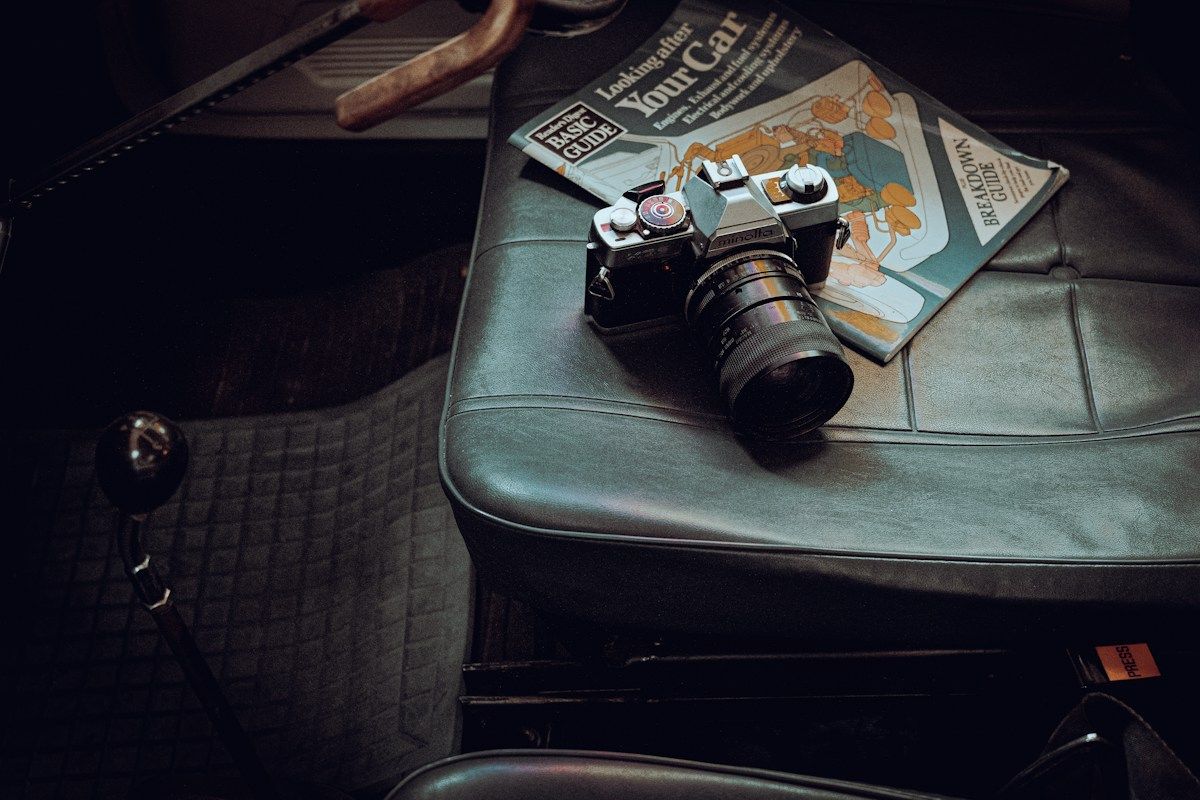
A photographer on FredMiranda did the thing almost nobody does. Before buying, he called the insurer and asked one specific question. He posted what happened:
"There is a site called the Phoblographer that recommends, Full Frame Insurance they love to talk of their journalistic integrity. I called this insurance company and was informed they do not cover for car break ins. I did not go with them. I went with RVNA as they are recommended by ASMP but the Hartford has the best coverage but twice the money. Make sure your insurance covers car brake ins!!"
That is one phone call against one company, which is weak evidence on its own. So we went and read what Full Frame publishes. He is right, and the published wording is broader than what he was told.
The short version:
- There is no single industry answer. Three incompatible tests are in use, and the policy you hold decides which one your claim is judged by.
- Full Frame excludes it outright. Its FAQ says theft of "equipment left unattended in vehicles or trailers is not covered." A smashed window does not help you, because the test is not forced entry.
- PPA PhotoCare and The Hartford's base wording pay, but only on proof of forced entry, per two photographers who bought them.
- PhotoCare Plus and Hill & Usher's Package Choice drop that condition by covering mysterious disappearance.
- One photographer was quoted about $600 a year by The Hartford to have the forced-entry requirement removed.
Does Camera Insurance Cover a Camera Stolen From a Car?
It depends on which of three clauses your policy uses, and they are not variations on a theme. They ask different questions, and a single break-in can be paid under one and denied under the other two.
The three tests, in order of how much they ask of you:
- Was the gear unattended in the vehicle? If yes, excluded, regardless of how the thief got in. This is Full Frame's test.
- Can you prove forced entry? Covered if there is a broken window or a damaged lock, denied if there is not. This is the common one.
- Can the loss be explained at all? Covered even without forced entry, because the policy covers mysterious disappearance. This is the upgrade tier.
Everything below is which named policy sits where, and what the people who bought them were told.
Full Frame Excludes It, and Forced Entry Is Beside the Point
Full Frame's own FAQ states the exclusion, and it does not turn on how the thief got in. The published wording is:
"theft of unattended equipment, or equipment left unattended in vehicles or trailers is not covered."
Read that against the forced-entry tests below and the difference is sharp. Under a forced-entry clause, a smashed window is the evidence that wins the claim. Under Full Frame's, a smashed window is irrelevant, because the disqualifying fact happened before the thief arrived: you left the bag in the car and walked away.
This is consistent with the rest of their wording. As our per-item limit post covers, the same FAQ says "Mysterious disappearances are not covered. So, if your gear is left unattended or unsecured and it is stolen, it's not typically covered." Vehicles are the specific case of a general rule. Their covered example is a bag taken off your shoulder.
So the caller got an accurate answer. The company publishes it, which is more than several carriers manage. The failure in that story is not Full Frame's wording, it is that a recommendation engine sent photographers at a product without mentioning the exclusion that disqualifies the most common way they lose gear.
PPA PhotoCare and PhotoCare Plus: The Upgrade Is the Vehicle Clause
The difference between PPA's two tiers is, for anyone who drives to shoots, mostly this clause. A photographer who read both put it plainly:
"An example is PPA's PhotoCare vs PhotoCare Plus. The latter covers unlocked vehicles and mysterious disappearances."
Another, describing his own quoting process, was blunter about the base tier:
"PPA requires that theft from a vehicle proof of forced entry."
The published material supports the direction without using those words. PPA's administrator publishes a tier comparison confirming that PhotoCare Plus covers "mysterious disappearance (when the cause of the loss cannot be sufficiently explained)" and base PhotoCare does not list it. The same page sets out the rest of the gap: base PhotoCare carries deductibles that "begin at $250 for your first loss, then go up $250 for each claim" and replaces "at actual cash value (depreciated value)," while Plus is a "flat $250 deductible" with scheduled property at replacement cost.
What the published page does not do is mention vehicles, locked or unlocked, anywhere. The clause that decides a car break-in is visible only in what two policyholders were told when they asked. That is the same disclosure gap we found on PhotoCare's deductibles, where the published number and the claimant's experience did not match.
The Hartford Gave Two Photographers Opposite Answers
This is the finding that should make anyone recheck their own policy rather than trust a carrier's reputation. Two photographers describe The Hartford's treatment of vehicle theft, and they do not agree, because they are describing different programs sold by the same underwriter.
One, in September:
"Hill & Usher's Photography Package Choice is underwritten by The Hartford. They'll cover theft or any kind of 'Mysterious Disappearance' as they define it. Meaning a vehicle does not need to show signs of forced entry. When quoted directly The Hartford's price was double for the exact same policy."
The other, in May, having gone to The Hartford directly:
"The Hartford also required proof of forced entry for vehicle theft. I needed that requirement removed, their revised quote was about $600 more per year."
Both are describing The Hartford. One got mysterious disappearance included through a photography program built by a specialist broker. The other, buying the carrier's own commercial product, got the forced-entry condition and a price to remove it.
Two things follow. The underwriter's name tells you nothing about this clause, so "it's underwritten by The Hartford" is not an answer to "does it cover a car break-in." And the clause has a price. About $600 a year, in one real quote, to delete one sentence. That is the clearest measure we have found of what the forced-entry condition is actually worth to an insurer, and it suggests they do not regard it as a technicality.
The same photographer added the piece of advice most likely to save a reader money, which is that the broker channel and the direct channel are not the same product at the same price. The Package Choice buyer found the identical cover cost double when quoted direct. Our Hill & Usher post covers what else sits inside that program.
Why "Signs of Forced Entry" Is Getting Harder to Produce
Because cars increasingly open without force, and the clause was written for an era when they did not. The thread that raised this quotes WIRED on a specific device:
"KARR Security System, installed in more than 2 million vehicles across the US by their estimate, can let any hacker within Bluetooth range send radio commands to silently unlock the car at will, turn off its alarm, honk the car's horn or flash its lights, or even disable its ignition and leave a driver stranded."
Many were fitted by dealers before sale, so an owner may not know the system is in the car at all. The insurance consequence is the point:
"A lot of insurance policies require evidence of forced entry (e.g. broken window, damaged lock, etc.). With the hack, it would appear as an unlocked vehicle and likely result in a denied claim."
It is not only that device. A photographer describing thefts in Silicon Valley reported a method that leaves nothing to photograph:
"There was a rip-off crew in Silicon Valley that used to scope parking lots with packet sniffers inconspicuously searching for electronic device hidden in trunks. Then they'd do a key fob relay attack leaving zero forced entry."
The fairest objection in the thread came from another member, and it is worth taking seriously rather than writing an alarmed post around a new gadget:
"But how is that different from using various tools to break into cars that don't requre breaking windows? In the late 60s/early 70s there was the butter knife trick on 4-door hardtops, or later on airbags, shaved keys, etc."
He is right that the hole is old. The answer given was about evidence rather than novelty:
"If the's any visible damage consistent with jimmying, butter knifing, or lock picking, then the most basic of photo insurance is more likely to pay out. If the lock mechanisms in inside the door panel are damaged, that's also a sign of forced entry. A slick lock smith that doesn't leave behind a trace, the story is different. With this hack, definitely no sign of forced entry."
That is the honest version. Skilled no-trace entry has always defeated this clause. What has changed is that it no longer takes skill, and it scales to millions of vehicles at Bluetooth range. A condition that used to exclude a rare case now excludes a common one, and the wording has not moved.
The Homeowners Policy That Paid in Eight Days
The product everyone in these threads treats as the weak option is the one with the cleanest claim story in them. A photographer at a drone conference in San Francisco had a rental car broken into and lost a Nikon D850, four lenses, a drone with accessories, and a laptop:
"Process was incredibly responsive and fast. Submitted the police report and receipts for the gear and in about 3 days had a direct deposit in my checking account. There was no obvious ding to my premium either. From theft to fulfilled claim was 8 days."
Asked how a home policy reached a car in another state, he explained:
"Homeowners covered it as the rental car was deemed a personal vehicle at the time of the theft, so it was covered. As for value, I had receipts from B&H and Dell for almost all the gear. No arguments from insurance about any of it."
Two conditions did the work and both are worth noting. The loss was personal rather than business, which is the line our business use post shows carriers enforce hard. And he had receipts for nearly everything, which is what turned valuation into a non-event.
This is not an argument for relying on homeowners cover. It is an argument against assuming the specialist product is automatically broader, which is the same conclusion our mysterious disappearance post reached from the policy forms: on this family of clauses, the specialist is sometimes the narrower of the two.
What to Ask Before You Buy
- Ask the vehicle question in the specific form. Not "does it cover theft," but "if gear is taken from my locked car and there is no visible damage, is that paid?" The three tests above produce three different answers to that sentence.
- Ask whether the test is forced entry or unattended. These exclude different things. Full Frame's unattended wording defeats you even with a broken window; a forced-entry clause pays in exactly that case.
- Ask what it costs to remove the condition. One photographer was quoted about $600 a year. You cannot evaluate a cheaper policy against a dearer one until you know whether the gap is this clause.
- Ask who the underwriter is, then ignore the answer. The Hartford appears on both sides of this comparison. The program and its wording decide the outcome, not the name on the paper.
- If you go through a general agent, use the term they recognise. As one member put it, "What folks want, if they go through a regular insurance agent, is 'inland marine coverage.' Strange name, I know."
- Check the off-premises wording if the policy is commercial. The same photographer warned that some agents "offer what sounds like a good deal but will only cover your gear within 100 feet of your business address."
- Keep receipts, not estimates. The fastest paid claim in these threads was the one where the owner produced B&H and Dell receipts for nearly every item.
Our policy clause reference now carries a row for this clause, with what each carrier publishes and what policyholders report, side by side. To compare providers more broadly, our comparison table covers what current providers actually offer, and our methodology explains how we evaluate them.
Related on GetCameraGuard

His $22,000 Rig Vanished From a Table in Ten Minutes. Whether That Counts as Theft Decides the Claim.
A sports photographer set his gear down at Copa America and came back to nothing. Insurers have a name for a loss nobody can explain, and the two forms we read answer it in opposite directions.
Read →
PPA Bundles Insurance Into Its $323 Membership. ASMP's $335 Membership Includes None, and Can Still Get You Broader Cover.
The two memberships cost within $12 of each other and sell completely different things. One includes a capped secondary policy, the other includes no insurance at all, and the route behind it reaches a clause PPA charges extra for.
Read →
PPA Says the Repair Deductible Is $50. One Member's Claim Came With Over $550 in Deductibles.
PPA publishes a $50 PhotoCare repair deductible. A member who filed reported over $550. You can't read the policy before paying $323 to check.
Read →
A Hill & Usher Policyholder's Deductible Is 10% of the Claim, Not a Flat Fee. The Two Are Equal at a $5,000 Loss.
One Package Choice policyholder reports a deductible of 10% of the claim, not a flat fee. Here is where percentage wins, and where it costs far more.
Read →