A Hill & Usher Policyholder's Deductible Is 10% of the Claim, Not a Flat Fee. The Two Are Equal at a $5,000 Loss.
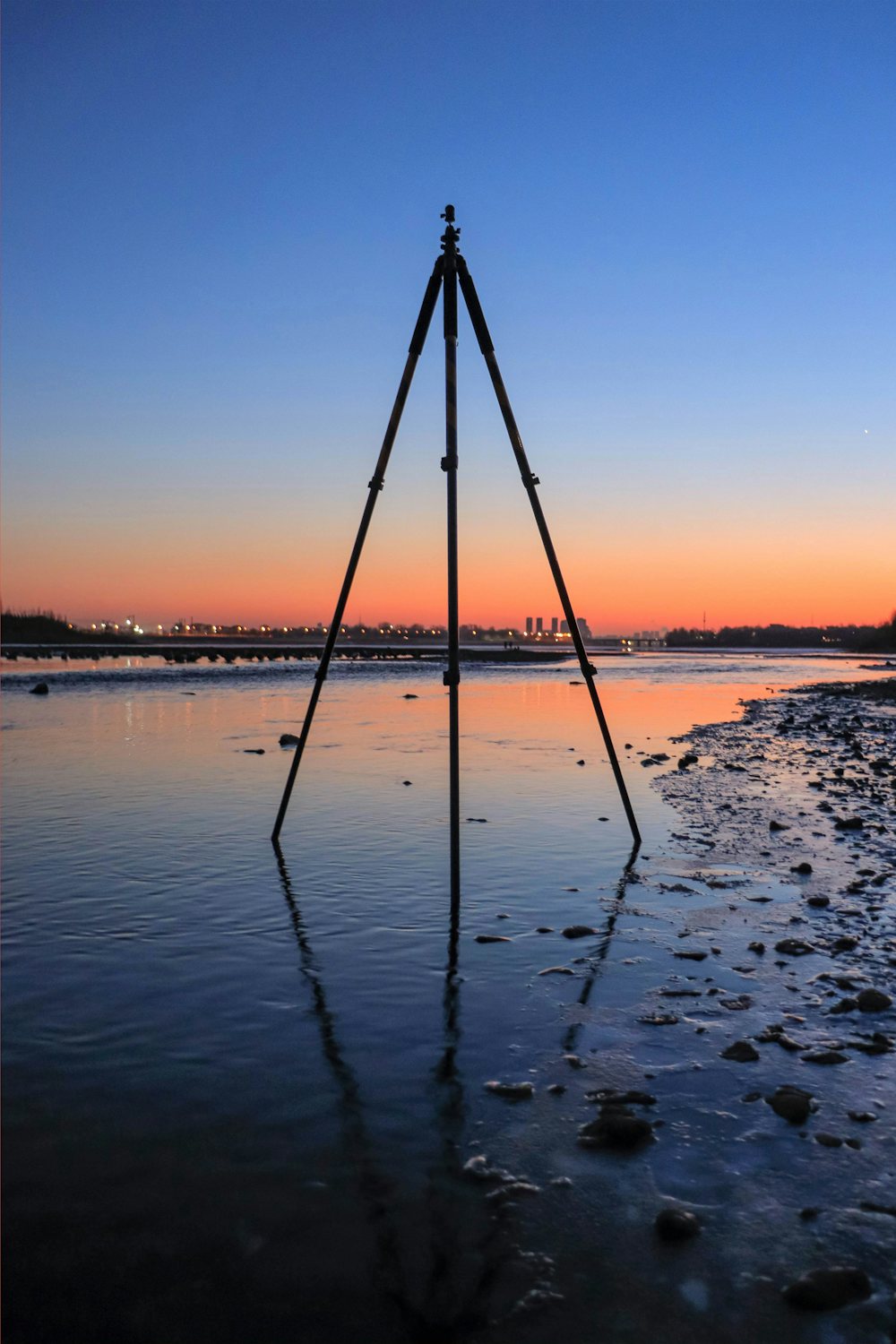
In a December 2024 thread on the Backcountry Gallery forums titled At which point do you start insuring your gear?, a member posting as fulltimewanderer answered with the two specific moments that decided it:
"Decided it was time for insurance when I heard the commotion as a tripod went over with a D3 and a 600F4, landing in the salt water. Followed a few weeks later when a friend thought his tripod legs were open and a 5D lll with a 100-400 hit the concrete. We have been insured thur Hill and Usher for probably 15 years."
Fifteen years with one program, and a real claim along the way, is a longer track record than most forum insurance discussions produce. Across three threads he explains what his policy pays and how. The most interesting part is not the company. It is the deductible, which is not a dollar amount at all.
What Package Choice by Hill & Usher Actually Is
It is a business insurance program for working photographers and videographers, sold by a Phoenix broker, and it has been running since 1998.
Package Choice is the program name; Hill & Usher Insurance & Surety is the agency behind it, at 3033 N 44th St Ste 300, Phoenix, Arizona, California licence #0C73815. In its own words, it is "the trusted source of comprehensive insurance for professional photographers and videographers across the U.S."
The coverage list reads like what it is, a small-business package rather than a personal gear policy: Camera Equipment, Business Personal Property, Photographer's Errors & Omissions (Professional Liability), General Liability, Drone, and Business Income & Extra Expense. They also advertise issuing certificates of insurance "often within 24 hours," useful if you shoot venues that will not let you in without a COI.
One thing we could not confirm is who underwrites it. fulltimewanderer names Philadelphia Insurance as the carrier standing behind Hill & Usher. Hill & Usher's own carrier page returns a 404, so that is a member's report rather than a verified fact, and it is worth confirming on a quote.
The only deductible figure Package Choice publishes anywhere on its site sits under Worldwide Camera Insurance:
"Get global protection for your photography equipment, so you can work confidently wherever your projects take you. With a deductible as low as $250."
"As low as $250" is a floor, and a floor implies a range above it. What the page does not mention is that on at least some policies written through this program, the deductible is not a fixed dollar amount in the first place.
The Deductible Is a Percentage of the Claim
On this member's policy it is 10%, and it works the same way on a repair as on a total loss.
In an August 2024 thread on insurance coverage for camera and video gear, fulltimewanderer described the one claim he has filed:
"One claim since we've been with them, wife dropped her D4 with a 300 2.8 and a 1.4 tc. Very easy to deal with. Paid complete cost of repair minus deductible, which is 10% of the cost of the repair."
Four months later, in a thread on equipment insurance recommendations, he set out how the same clause behaves on a write-off:
"Our policy is a replacement policy, so if my wife's D4 is a total loss it will pretty much pay for a Z9. Deductible is 10% of total loss. Our tripods and gimbal heads are covered. You determined what you want covered and set the insured amount."
Notice what he never says: what the repair cost. He gives the percentage and nothing else. Any dollar figure attached to that claim is a guess, so we are not going to put a number in his mouth. Every figure below is either published by the provider or labelled as our own illustration.
Percentage Deductible vs Flat Deductible: Which One Is Cheaper?
Below a crossover point the percentage is cheaper. Above it, the flat deductible is. The crossover is trivial to find, and it is the number nobody writes down.
A 10% deductible costs the same as a flat deductible of $D when the loss is ten times $D. That is the entire calculation.
- Against a flat $500, the crossover is a $5,000 loss. Under $5,000 the 10% structure charges you less than a $500 flat deductible would. Over $5,000 it charges you more, and the gap widens with every dollar of damage.
- Against Package Choice's own advertised $250 floor, the crossover is $2,500. If a flat $250 option exists on the same program, the percentage version only wins on claims smaller than $2,500.
- Against PPA PhotoCare's flat $350 total-loss deductible, the crossover is $3,500. That figure comes from PPA's published terms, which we looked at in detail in our breakdown of PPA PhotoCare's deductibles.
Two worked examples, clearly labelled: these are illustrations we constructed, not numbers anyone in these threads reported.
- An illustrative $600 repair costs you $60 under a 10% deductible. A flat $500 deductible would leave you paying $500 of it, which means most people would not file at all. This is the percentage structure at its best.
- An illustrative $12,000 total loss costs you $1,200. A flat $500 deductible would cost you $500. The percentage structure has just charged you an extra $700 on the single worst day your gear will ever have.
Here is the asymmetry that makes this more than an arithmetic curiosity. A flat deductible stops. It is $500 on a $600 repair and it is still $500 on a $50,000 fire, so its share of your loss shrinks as the loss grows. A percentage deductible does the opposite. It has no ceiling, and it grows in lockstep with the damage.
So the finding is uncomfortable but simple. A percentage deductible is cheapest on exactly the claims you could have absorbed out of pocket, and most expensive on exactly the claims you bought insurance for. It optimises the small stuff and taxes the catastrophe.
What the Percentage Structure Genuinely Gets Right
Quite a lot, actually, and the member with fifteen years and a real claim is not being polite when he calls it "Very easy to deal with."
- Small claims become worth filing. Under a flat $500, a repair in the mid hundreds is effectively uninsured. You pay it yourself because filing gets you nothing. At 10%, that same repair returns most of its cost. If your realistic loss scenario is a lens that gets knocked over rather than a van that gets emptied, the percentage structure is straightforwardly the better deal, and not marginally.
- The replacement basis is strong. He describes a policy that would put a Z9 in his wife's hands after a D4 write-off, which is replacement of function rather than a cheque for what a decade-old body is worth today. That is meaningfully better than PPA PhotoCare's approach, where replacement cost is capped at the item's original purchase price, so gear bought used pays out like gear bought used.
- You set the insured amount, and accessories count. "You determined what you want covered and set the insured amount," with tripods and gimbal heads inside the schedule. Support gear is a common thing for personal policies to argue about, and here it is simply covered.
None of that is undone by the crossover math. It just means the structure has a shape, and the shape favours one kind of policyholder.
Where the 10% Actually Hurts
On a total loss, and specifically on a large one.
A total loss is the fire, the theft of a full kit, the case that goes off the back of a boat. It is the scenario where you are already replacing everything at once and already unable to work, and it is the moment a percentage deductible presents its largest bill, because the bill is calculated from the size of the disaster.
A flat deductible does the reverse. It is annoying on small claims and almost irrelevant on large ones, which is arguably what a deductible is for: keeping nuisance claims out of the system while leaving the catastrophic cover intact. A percentage deductible inverts that design. That is a reasonable trade for some people. It is just worth knowing which side of it you are on before the claim, not after.
If you get a quote from any program using this structure, ask two questions in writing: is the percentage capped at a maximum dollar amount, and is a flat-deductible option available instead. Neither answer is published, and both change the math above completely.
Is Package Choice Available to Hobbyists?
Not stated publicly, and it should be the first question you ask rather than something you assume.
Package Choice's own page says professional photographers and videographers, and everything in the coverage list points the same way. Errors and omissions cover, general liability, business income, certificates of insurance for venues. These are the components of a business policy. None of them make sense for someone who has never invoiced anybody.
A different member of the same forum, TomRC, named the same gap from the inside:
"Homeowners now but used Hill & Usher (equipment, liability) for years when making $$ with a camera. Not sure what they offer for the non working hobbyist crowd."
That is someone who held the coverage while working, moved to a homeowners policy when he stopped, and does not know whether the door is still open. We do not know either. Hill & Usher does not publish an eligibility rule for non-professionals, and we are not going to guess at one. Ask them directly whether they write for someone with no photography business, and get that answer first.
Who This Structure Suits
If your realistic worst case is a repair, the 10% deductible is a good structure and probably a better one than a flat $500. Dropped bodies, knocked-over tripods, a lens that needs a mount rebuild. Those are the claims that actually happen to most photographers, they land well below every crossover above, and a percentage deductible makes them worth filing instead of worth swallowing.
If your realistic worst case is losing the whole kit at once, the same clause works against you, and it does not stop working against you at any loss size. That is the trade, and it is one you can evaluate with a pocket calculator before signing anything, which is more than can be said for most terms in this market.
For how we weigh deductible structure alongside the other things that decide whether a policy is worth carrying, see our full methodology, or jump straight to the comparison table to see what's currently available.