Allstate Will Schedule Your Camera. Three of Its Own Pages Give Three Different Answers on the Deductible.
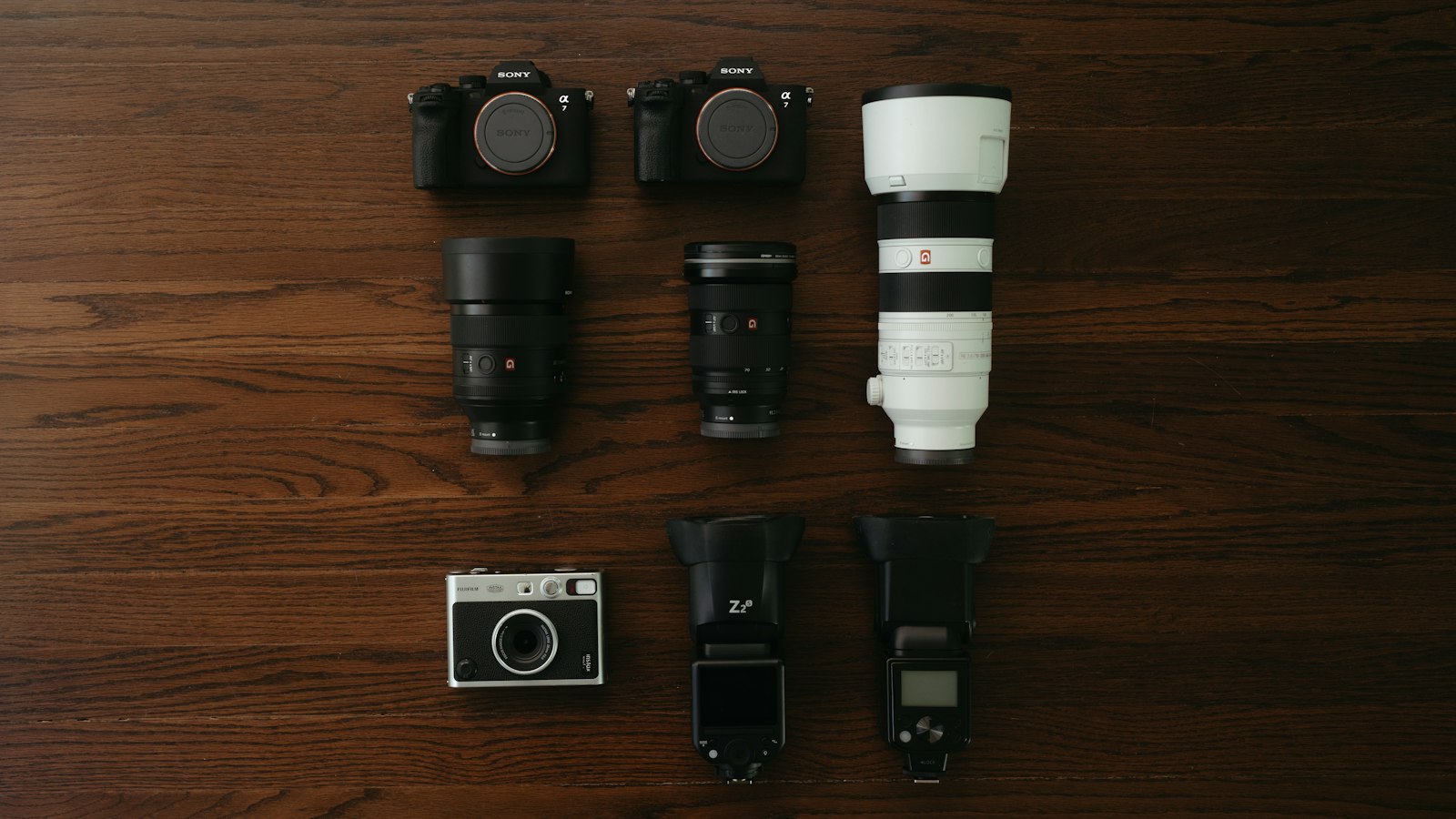
A Nikon shooter in Oceanside opened a DPReview thread in May 2025 looking for a new insurer, and led with the reason he had stayed put for so long:
"Back in November 2012, I filed a claim with Allstate for and was reimbursed for all the bodies and lenses that went swimming when my home was flooded due to Superstorm Sandy"
Then the detail that makes the story useful. He had trimmed the policy shortly before the storm:
"about a month or two before the storm I took my old, unused D1x off the policy - and saved a whole $50 a year. If I had kept it insured, Allstate would have paid it's full purchase price."
The short version:
- Allstate names "Expensive cameras" as a schedulable class, alongside jewelry, furs, firearms and musical instruments.
- You cannot buy it on its own. Allstate calls it "an optional add-on to your homeowners insurance policy," so no underlying policy means no schedule.
- Three Allstate pages give three different deductible answers: no deductible, a lower-or-zero option, and "you'll likely have to select a deductible."
- Allstate publishes eight real jewelry prices by ZIP code. It publishes zero camera prices. The only figure we found was a 2004 agent quote of $52 a year for $2,000 of gear.
- The endorsement form is not published anywhere. Allstate posts its base homeowners policy. Not this.
What Does Allstate's Scheduled Personal Property Actually Cover?
Cameras by name, as an add-on that both raises the limit on a specific item and widens the list of things that can happen to it. Allstate's scheduled personal property page describes the product in one line:
"It's an optional add-on to your homeowners insurance policy that provides coverage for a greater number of risks and may increase the coverage limits on specific, high-value items."
Under "belongings you might want to consider," the page lists jewelry and furs, art and antiques, stamp or coin collections, firearms, musical instruments, and "Expensive cameras." Allstate's renters page on cameras goes further and confirms you can schedule a kit rather than one body:
"This is called scheduled personal property coverage, and it can be assigned to individual items as well as groups of items, like your camera and related photography equipment."
The "greater number of risks" part is the real reason to do it, and Allstate's lost items page says which risk it means. Its own worked example is a camera left under a chair at an airport, and its answer is that standard personal property coverage does not respond, because losing something is not a peril. Scheduled items, by contrast, "may be protected against additional risks, such as accidental loss."
This matters more than it sounds, because Allstate's base form is named-peril on contents. The published Homeowners Policy Special, form AP4687 lists 18 covered causes of loss under Personal Property Protection, and dropping a lens on concrete is not among them. Neither is flood, which is excluded outright. That is part of why the Sandy claim above is interesting: we cannot confirm from a forum post which Allstate policy paid it, but a schedule that a photographer adds and removes individual bodies from, at roughly $50 a year for one, behaves like an itemized endorsement and not like Coverage C.
Can You Buy Allstate Scheduled Personal Property on Its Own?
No. It is an endorsement, and an endorsement has to attach to something. Allstate's own definition page calls a scheduled personal property endorsement "a change to your insurance policy that adjusts your coverage," and its scheduled property page calls it an add-on to a homeowners policy. There is no standalone version, and no way to buy it if Allstate does not already write your home, condo or renters coverage.
That is exactly the wall a photographer hit in a March 2024 DPReview thread. He was moving, traveling the west coast, and said he "will not have house / home insurance to use as a base for an insurance policy." The first answer he got was an Allstate recommendation:
It's just a "rider" on the policy and not all that expensive either. Check them out. By no means dependent on your being a professional.
Both halves of that are true and neither one helps. The rider is cheap, it genuinely does not require you to be a professional, and it is completely unavailable to a person with no policy to ride on. This is the same shape as the gap we documented in Travelers' HQ-61B endorsement: a good product that quietly requires you to move your house insurance first.
The contrast inside Allstate's own catalog is sharper still. Allstate sells standalone jewelry insurance, through Jewelers Mutual, with a list of actual quoted prices such as "$124/yr for an $8,000 ring in Dallas (75043) with a $0 deductible." There is no camera equivalent. Jewelry gets a product page, a price list and a standalone option. Cameras get a bullet point.
Is There a Deductible on Scheduled Camera Gear?
Allstate has published three different answers, and they are not consistent. On the scheduled personal property page, under a heading that reads "No deductible":
"If you purchase scheduled personal property coverage, you may have the option of choosing a lower deductible or no deductible for the scheduled items."
On the renters camera page, the same product, stated as a near-certainty:
"You'll also typically find that you won't have to pay a deductible if you need to file an insurance claim for an item that you've scheduled."
And on the lost items page, updated in February 2026, the opposite default:
"when you purchase coverage, you'll likely have to select a deductible (the amount you pay of a covered claim)."
One page says no deductible, one says you probably will not pay one, and one says you will likely have to pick one. The endorsement explainer splits the difference again, saying "you may be able to choose a lower deductible or no deductible at all in some situations." None of the four says which situations, which states, or which classes of property.
The one hard number we found is old. In a January 2004 DPReview thread, a commenter came back from his agent with a quote that answers every one of these questions at once:
"I just spoke with my Allstate agent and for $52.00 a year I can have zero deductable for $2000 worth of camera equipment. It would be added to my homeowners. I need to provide copies of reciepts and it must be for personal use."
Zero deductible, attached to the homeowners policy, receipts required, personal use only. Treat the price as a historical artifact rather than a quote you can get today, for the same reason we flagged in our State Farm post: a forum comment about a product has a shelf life, and this one is twenty-two years past it.
Receipt or Professional Appraisal?
Allstate says both, on different pages, and for cameras the distinction is not academic. The scheduled property page hands the question to a trade body:
"To get the items scheduled, you typically need to provide your insurance company with a recent receipt or a professional appraisal, Insurance Information Institute (III) says."
The lost items page drops the receipt option entirely: "You will likely need to get a professional appraisal to purchase scheduled personal property coverage."
For a ring, an appraisal is a normal errand. For a two-year-old mirrorless body there is no appraiser and no reason to want one, because the B&H price is the appraisal. The practical version is a receipt, a serial number and a current replacement price, which is what the 2004 commenter's agent asked for. Where an appraisal genuinely earns its fee is the case we covered in our vintage film camera post, where the receipt understates the item by thousands. Ask which one your agent wants before you assemble the wrong pile of paper.
What Happens the Day the Camera Earns Money?
Allstate's consumer pages never say the schedule excludes business use, but the base policy form makes the stakes of that silence obvious. AP4687's limitations on certain personal property include a line that should stop any working photographer:
"Property used or intended for use in a business while the property is away from the residence premises."
The limit on that group is $200. On the residence premises it is $2,000. A body and a lens that earn money and travel to a shoot fall into a $200 bucket if they are not scheduled, and the question of whether the schedule rescues them is the exact question Allstate does not answer in public. The 2004 agent's phrasing, "it must be for personal use," is the only direct statement on it we could find, and it came from one agent in one state two decades ago.
What Allstate does do is route you away. Its renters page ends with a nudge:
"And, if you're a professional photographer with your own business, you may find that small business insurance provides the coverage you want for the equipment you use on the job."
And its photographer insurance page does not sell you an Allstate policy at all. The quote button carries a disclosure that "you will leave Allstate.com and be directed to the NEXT website." Allstate will schedule a hobbyist's camera on a homeowners policy, and it will hand a working photographer to another carrier. That is a coherent position. It is just not one you would guess from the marketing pages, and it lines up with the pattern we traced in State Farm's Personal Articles Policy, where the personal product and the commercial product are sold by the same brand to people who cannot tell them apart.
Why Can't You Just Read the Endorsement?
Because Allstate does not publish it. Allstate publishes its base homeowners forms, including AP4687 and the older AP1 standard homeowners form filed with Nevada's insurance regulator. We could not find the scheduled personal property endorsement itself on allstate.com or in any state filing we could reach, which means the document that would settle the deductible question, the business-use question and the flood question is not available to you before you buy.
That gap has teeth here, more than on most endorsements, because of one line in AP4687's list of property not covered under Coverage C:
"Personal property specifically described and insured by this or any other insurance."
Read that against what you are about to do. The moment you schedule a camera, the base policy stops covering it, and the endorsement becomes the whole of your coverage on that item. You are trading a document you can read for a document you cannot. That is usually a good trade, since the schedule is broader and often cheaper to claim on. It is still a trade, and it is the third time this site has run into the same wall, after PPA's PhotoCare deductibles and State Farm's unpublished policy form.
Before You Schedule Camera Gear With Allstate
- Ask whether your quoted schedule has a deductible, and get the number in writing. Allstate's own pages say no deductible, probably no deductible, and probably a deductible. Only your declarations page settles it.
- Ask whether the schedule covers the gear when it earns money, and ask it plainly, not as "is it covered on a shoot." Unscheduled business property away from home caps at $200 under the base form.
- Ask which perils the schedule adds. Accidental loss and drops are the point. Confirm flood and earthquake in writing if you are anywhere they matter.
- Ask whether it is agreed value or replacement cost. The Sandy claimant described Allstate paying "full purchase price" on a scheduled body, which is the behavior you want and not something the public pages promise.
- Ask for the endorsement form number and request a specimen copy before binding. If an agent will not produce it, that is information too.
- If you have no Allstate home or renters policy, price a dedicated gear insurer before you move your house insurance to unlock a rider.
Allstate's answers on accidental damage and settlement basis sit beside every other carrier we have read on our policy clause reference, which is also where the unread endorsement form is recorded as a gap rather than quietly skipped.
To see how this compares against dedicated gear insurers, our comparison table covers what current providers actually offer, and our methodology explains how we evaluate them.
Related on GetCameraGuard
State Farm Insures Cameras for About $1 per $100, With No Deductible. It Also Stops Working the Day the Camera Earns.
A real estate photographer asked about State Farm's Personal Articles Policy. Everyone who answered had a different State Farm product. Here is the line between the two, and what happens when you cross it.
Read →
Travelers' HQ-61B Endorsement Covers Cameras, But Only If You Already Have a Travelers Home Policy
"HQ-61B" is Travelers' Valuable Items Plus endorsement, and cameras are explicitly one of the covered classes. Here's what it actually covers, what it costs you in flexibility, and the one upside worth crediting.
Read →
Valuable Items Plus or Special Personal Property? They Fix Different Problems
One changes which causes of loss are covered. The other changes how much you get for a camera. Choosing between them is a category error, and a policyholder whose all-risks cover still declined shows why.
Read →
You Don't Need an LLC to Insure Your Camera Gear (But It's Easy to Think You Do)
A hobbyist with $20k in gear — Canon R8, Leica M11, iPad Pro — hit a wall trying to insure it without a business name or address. Here's why that wall exists, and which providers don't require one.
Read →