Valuable Items Plus or Special Personal Property? They Fix Different Problems
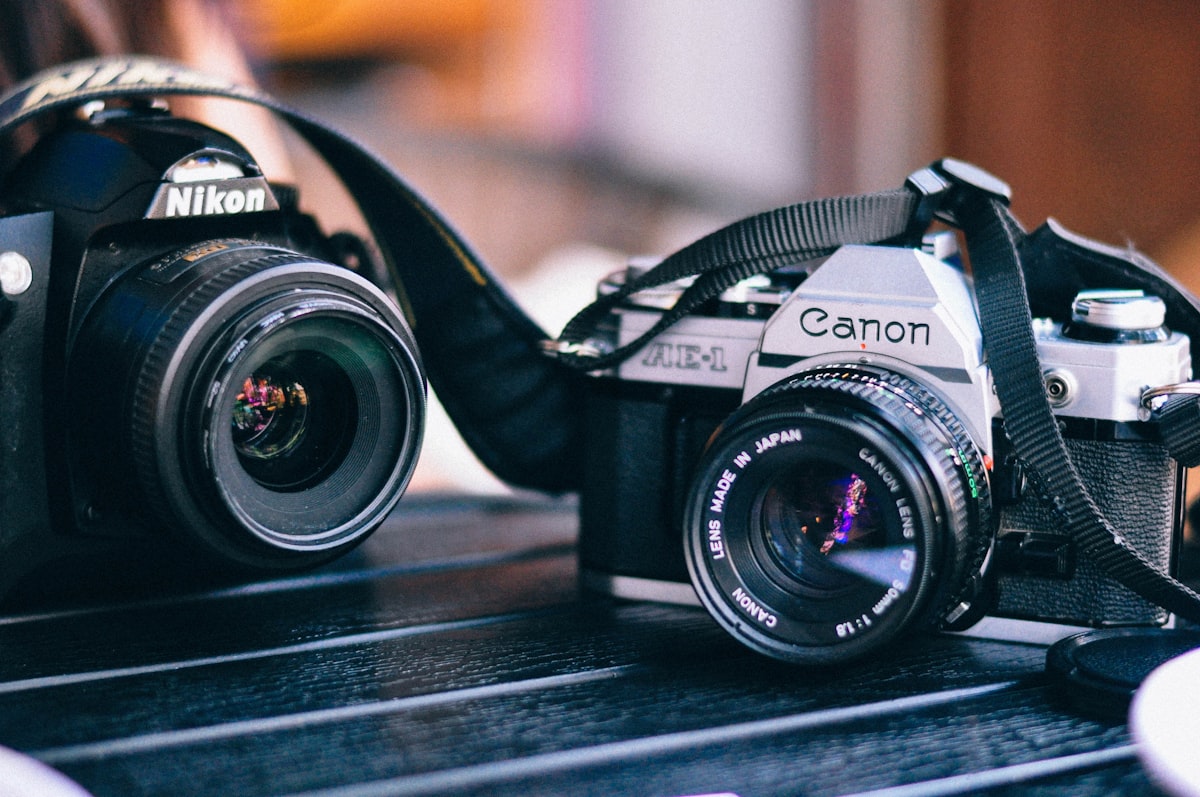
On Talk Photography's equipment insurance thread, the forum's admin, lindsay, explained what pushed her toward specialist cover. Around £3,000 of cameras and a laptop were taken from the locked boot of her car during a brief stop at a services. Her home contents insurer declined. The clause in her account that deserves more attention than it usually gets is the last one:
"My interest in this was prompted by having circa £3k of cameras and laptop stolen from the locked boot of my car whilst very briefly stopped at a services, and my More Than home contents policy did not cover it despite an all risks element to the cover."
Despite an all risks element to the cover. That is the exact situation people are trying to avoid when they search for whether they want Valuable Items Plus or Special Personal Property, and the reason the search rarely resolves is that the two are not competing answers to one question.
The short version:
- They are not alternatives. Special Personal Property changes which causes of loss are covered. Valuable Items Plus changes how much you get for a class of property.
- Open perils does not lift a sub-limit. Broadening the perils leaves the special limits on cameras and jewelry exactly where they were.
- Special limits are low. Around $1,500 to $5,000 per item on an unscheduled policy, and about $1,500 for jewelry theft per the Insurance Information Institute.
- A kit above those numbers usually needs both, or needs scheduling, which handles both axes at once.
Are Valuable Items Plus and Special Personal Property Alternatives?
No. They operate on different axes of the same policy, and fixing one leaves the other exactly as it was.
Every property policy answers two separate questions. First, what caused the loss, and is that cause covered? Second, what was lost, and what is the most this policy will pay for that kind of thing? An endorsement that improves your answer to the first question does not touch the second. That is the whole misunderstanding compressed into one sentence, and it is why "or" is the wrong conjunction in the search.
What Special Personal Property Actually Changes
The perils basis, and only that. A standard homeowners policy covers personal property on a named-perils basis, meaning it lists the causes of loss it will pay for and anything unlisted is out. The Special Personal Property endorsement, as Spotlight Insurance Agency describes it, "changes the coverage basis to 'open perils.' That means it covers damage or loss from any cause, except those specifically excluded."
That is a genuine and worthwhile upgrade. It is what turns "we don't cover that because it isn't on the list" into "we cover that unless we excluded it," which is a much better position for the kind of losses photographers actually have: gear that gets dropped, soaked, or simply disappears.
What it does not do is touch the amount. The same guidance is explicit that broadening the perils leaves high-value property where it was, noting that "Some high-value items may need to be scheduled for full coverage beyond standard endorsement limits" and that "Certain high-risk items may still require separate scheduling for full coverage."
What Valuable Items Plus Actually Changes
The limits, and only for the classes you buy. Travelers' Valuable Items Plus endorsement, the form usually cited as HQ-61B, provides blanket coverage for named classes of property including cameras, and cameras there is defined broadly enough to take in lenses, filters, tripods and cases. You choose a total limit for the class and pay for it by the $100 of coverage. Our breakdown of HQ-61B covers what the form says and what it costs you in flexibility.
Crucially, it supersedes rather than supplements. The endorsement's own language states that the coverage "supersedes any coverage provided by the basic policy contract" for those classes. So it is not stacked on top of your baseline personal property limit for cameras, it replaces it. That is exactly what you want when the baseline is $1,500, and it is also why the endorsement carries its own per-item ceiling, which we covered on Saturday.
So Why Did an All-Risks Policy Still Decline?
Because perils were never the problem in that claim. lindsay's contents policy had an all-risks element, which is the same broadening that Special Personal Property buys. It still did not pay, and her opening post names the reason:
"household cover was only for items specified on the policy, and I hadn't updated it with all of my current list of kit"
Specification is a third requirement, separate from both perils and limits. Gear that was never listed is not covered at any limit, under any perils basis. She summarised the outcome later in the thread with the insurer named:
"It certainly didn't cover my kit stolen from a locked boot (MoreThan home insurance) which is one of the reasons I opted for dedicated camera insurance and kicked off this info topic with help from Eversure."
There is a fourth axis lurking in that story too, which is where the gear was. Property left in a vehicle is a standard restriction, and Dave Canon, another regular in the thread, treated it as a known constraint rather than a surprise:
"I have always been aware that my kit would not be covered if left in the car other than in a locked boot"
His gear was in a locked boot and hers was too, which is a reminder that the phrasing of a vehicle clause repays close reading rather than assumption.
Which One Do You Actually Need?
Work down the four axes in order, and buy against whichever one your policy currently fails.
- Perils. Is your personal property written on named perils? If so, Special Personal Property is the fix, and it is usually inexpensive relative to what it buys. This is the axis that decides whether an accidental drop is even a covered cause.
- Limits. What is the special limit on cameras? If it is the $1,500 to $5,000 range and your kit is worth more, no amount of peril-broadening helps. Valuable Items Plus, or scheduling, is the fix.
- Specification. Does the policy pay for property you never listed? Many contents policies do not, above a threshold. This is the axis that cost lindsay her claim.
- Location and circumstance. Vehicle clauses, unattended-property clauses, and away-from-premises limits all sit outside both endorsements.
A photographer with a $30,000 kit on a named-perils policy with a $1,500 camera sub-limit has failed three of the four, and fixing any single one still leaves a claim exposed to the other two.
Where Scheduling Wins Over Both
Scheduling handles the limits and the specification axes together, which is why it remains the default recommendation for expensive individual items. Listing a body or a lens separately with its own agreed amount both records its existence and sets its own ceiling, and scheduled coverage is conventionally written on an open-perils basis, so it tends to carry the perils upgrade with it.
The trade is paperwork and, above certain values, documentation. It is the right trade for the two or three items that would hurt most to lose, and usually the wrong one for a bag full of accessories, which is precisely the split blanket coverage exists to handle.
The Practical Ask
When you put this to an agent, do not ask which endorsement you should buy. Ask the four questions instead: is my personal property named perils or open perils, what is the special limit for cameras, does anything need to be specified to be covered, and what happens if the gear is in a vehicle. The answers tell you which endorsement solves your actual gap, and often the honest answer is that one of them solves nothing you have.
Our comparison table lists the standalone providers we track, and our full methodology sets out the five questions we check for each one.