SF Camerawork Gave Six Days' Notice After 52 Years. Three Weeks Later, It's Reopening.
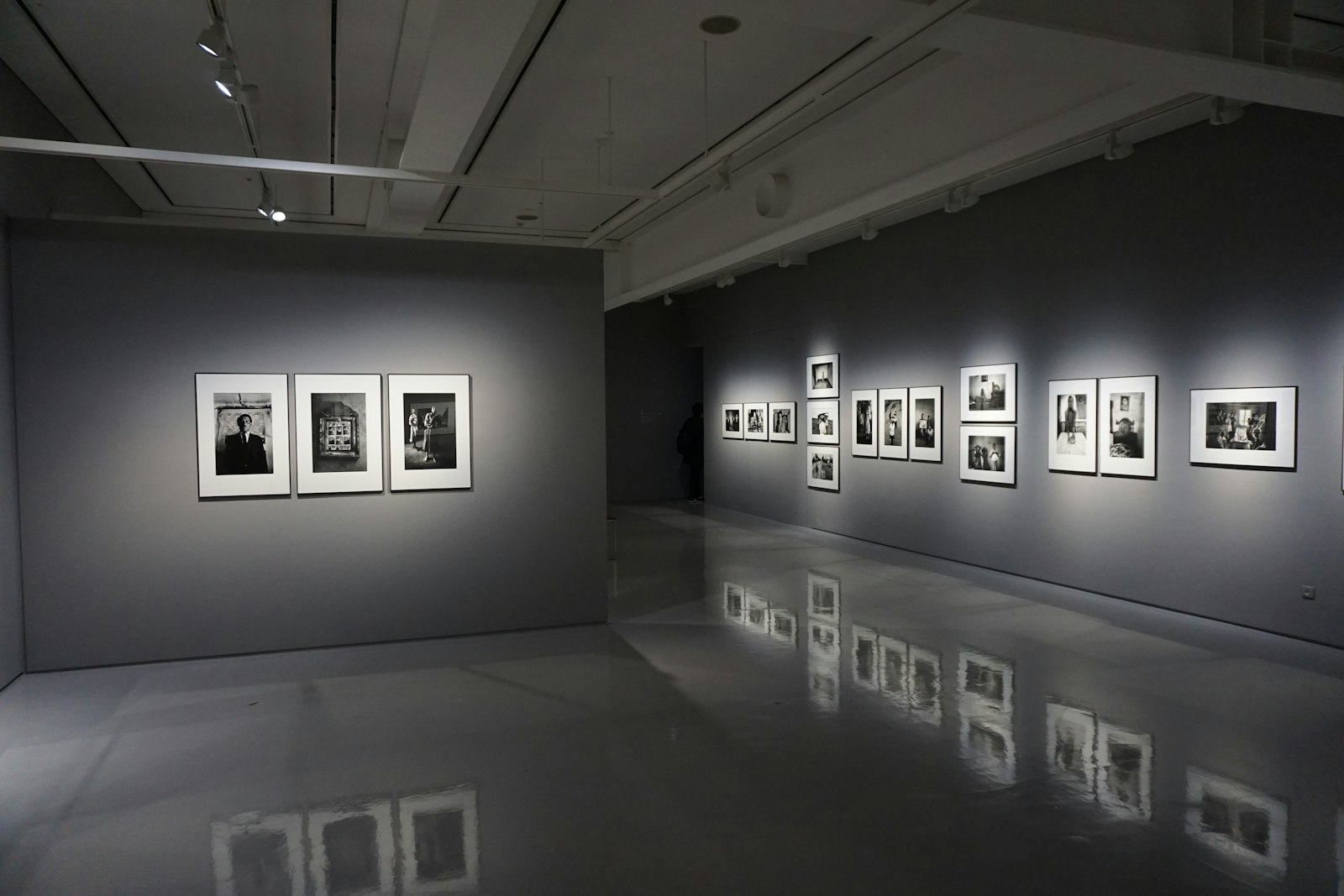
On August 10, SF Camerawork's board announced that the 52-year-old nonprofit would close. The gallery would stay open through Sunday, August 16, for the final days of John Chiara's Bay Panel, and then that would be that. Six days' notice, on an institution that had been running since 1974 and had given Sally Mann, Robert Mapplethorpe and Susan Meiselas early Bay Area shows.
It did not close. SF Camerawork reopens today, September 9, with an entirely new board of directors, and the whole reversal took about three weeks.
The short version:
- Closure announced August 10, citing rising operating costs, declining public funding, and a changed philanthropic landscape. The only staff member listed on the site at the time was a gallery associate.
- Hal Fischer, 75, drafted a rescue plan within days, offering to secure three months of funding and an exit for board members who wanted one. He is now board president.
- The entire board turned over. Monique Deschaines is interim executive director, a role that had been sitting vacant.
- Camerawork was not in debt, which is the single fact that made a rescue possible rather than a wind-down.
- It reopens today, with a members' exhibition running September 16 to October 4 and a reception on September 17.
What Actually Happened, and How Fast
Three weeks, start to finish. The Mission Local account has the clearest timeline: the board announced on August 10, and within days Hal Fischer had drafted a plan and sent it to them. His proposal was to secure funding for three months and to provide, in his words, "an honorable exit ramp to board members who don't want to continue on."
Fischer is not a bystander. He has done this twice before, helping the organisation achieve nonprofit status in 1977 and stepping in as interim director in 2010. He is also one of the artists SF Camerawork's own history page names among its founders, alongside Donna-Lee Phillips and Lew Thomas, the three of whom SFMOMA showed together in its 2020 exhibition Thought Pieces.
The outgoing board's email, quoted by KQED, reads like an organisation that had run out of road rather than one that had run out of money:
"Despite the determined efforts of our staff, board, artists, donors and supporters to secure a sustainable future, we have reached the difficult conclusion that we can no longer continue operations."
Fischer's read on it is blunter, and it is the part that explains why a reversal was available at all:
"one could glean that the Camerawork board became disengaged from its longstanding stakeholder community"
He told SFist the outgoing board was simply spent: "I think they were pretty fatigued. I think it's been a really tough road." They agreed to the proposed changes. The new board includes photographer Alex Ramos, City College of San Francisco photography department chair Erika Gentry, and five others, several with long histories at the organisation. Gentry put the mandate plainly to Mission Local: "Our goal is to stabilize it and to get it up again."
The gallery keeps its lease at Fort Mason Center for Arts and Culture, where it has been since 2022, and where the lease had been set to expire at the end of August. That deadline is most of why this happened in three weeks instead of three months.
Why This One Came Back When Others Didn't
Because there was nothing to unwind. Fischer told Mission Local that Camerawork carried no debt, and that is the difference between a rescue and a liquidation. A nonprofit with no creditors can hand over its board, keep its lease, and open again. One with creditors has obligations that outlive any amount of goodwill.
That matters because the surrounding news is not good. KQED noted that California College of the Arts and the Mission Cultural Center for Latino Arts have both announced closures this year. Bay Panel, the show hanging when the announcement came, was originally commissioned for Pier 24, which KQED described as "another dearly departed free-to-visit photography gallery." When SF Camerawork posted the reopening on Instagram, one commenter made the point more economically than any of the coverage did:
"the number of photo organizations has shrunk and we need the ones we've grown to love"
The gallery's own framing is that this is a new chapter rather than a reprieve:
"With new leadership and an entirely new Board of Directors, we are committed to building a sustainable future for SF Camerawork while staying true to what has always made SFC unique: artists first, ambitious photography, and an open and engaged community."
What SF Camerawork Does That a Commercial Gallery Can't
It shows work that nobody is trying to sell. That is the whole argument for the nonprofit structure, and SF Camerawork's own description of it is unusually direct: the framework "allows for creative freedom independent of a sales revenue model," which is what lets the gallery program installation-based, genre-hybrid and materially experimental work, along with work on subjects a commercial room would find inconvenient.
The track record is the evidence. In its early years it was the first Bay Area organisation to host exhibitions and lectures by Sally Mann, Robert Mapplethorpe, Susan Meiselas and Joel-Peter Witkin, all controversial at the time and all now canonical. More recently it has given first West Coast exhibitions to John Chiara, Binh Danh, Erica Deeman, Chris McCaw and Meghann Riepenhoff. Allan Sekula, Uta Barth, Todd Hido and Jamil Hellu all passed through. The pattern is consistent enough to be a business model: show people early, before the market has decided about them.
It is also more than a room with walls. The annual calendar runs to critiques, workshops, lectures, panel discussions and curator-led tours of other institutions, which is the unglamorous infrastructure that turns a city into a photography scene rather than a set of individuals who happen to live near each other. Fischer made exactly that case to KQED: "What Camerawork does for emerging photographers, emerging curators, there's more need for that than ever."
The origin story is a good one too. It began as the Lamkin Camerawork Gallery in Fairfax, and according to the San Francisco Chronicle its founder John Lamkin brought it to San Francisco and sold it to his own gallery volunteers for a dollar. It became a nonprofit in 1977 and has occupied something like half a dozen locations since.
The Work That Was Hanging When the Announcement Came
Bay Panel is worth describing, because it is a good example of the kind of thing this gallery exists to show. KQED described it as six separate framed images, all unique positive prints that John Chiara makes with the help of enormous hand-built cameras and a flatbed trailer. There is no negative and no edition. Each panel is a single object that came out of a process built by hand for that purpose.
That is not work a commercial gallery would commission on spec, and the piece's own history says as much: it was originally made for Pier 24, another free-to-visit space that has since closed. The show ran its final days in a building whose board had just announced it was shutting down, and then came off the walls on August 16 as scheduled.
What Is Still Unresolved
Quite a lot, and the coverage has been honest about it. The rescue proposal, as SFist reported it, was to review the organisation's finances, install new leadership, and help fund operations into early 2027. That is a runway, not a solution. Fischer's stated plan is to stabilise the organisation through fundraising, which he argues is a task the right board can accomplish, and Gentry told Mission Local the board is still looking for additional members.
The executive director role is filled on an interim basis. Staffing, as of the closure announcement, was one gallery associate. And on the Instagram post announcing the reopening, the most useful comment was a question that nobody had answered yet:
"Who are the new leaders and board?"
That is not a criticism so much as a description of how fast this moved. Three weeks is not long enough to have all the answers, and the alternative was a gallery that no longer existed.
Today
The doors open again at Fort Mason, with a members' exhibition from September 16 to October 4 and a reception on the 17th. A members' show is a fitting way to restart, given that the argument for saving the place was made by the community that turned up when it looked like it was ending.
The outgoing board ended its closure email with a line worth keeping:
"to photographers, those who have devoted their lives to the medium and those just beginning, keep creating."
They were right, and it turned out to be considerably less final than they meant it.
Related on GetCameraGuard
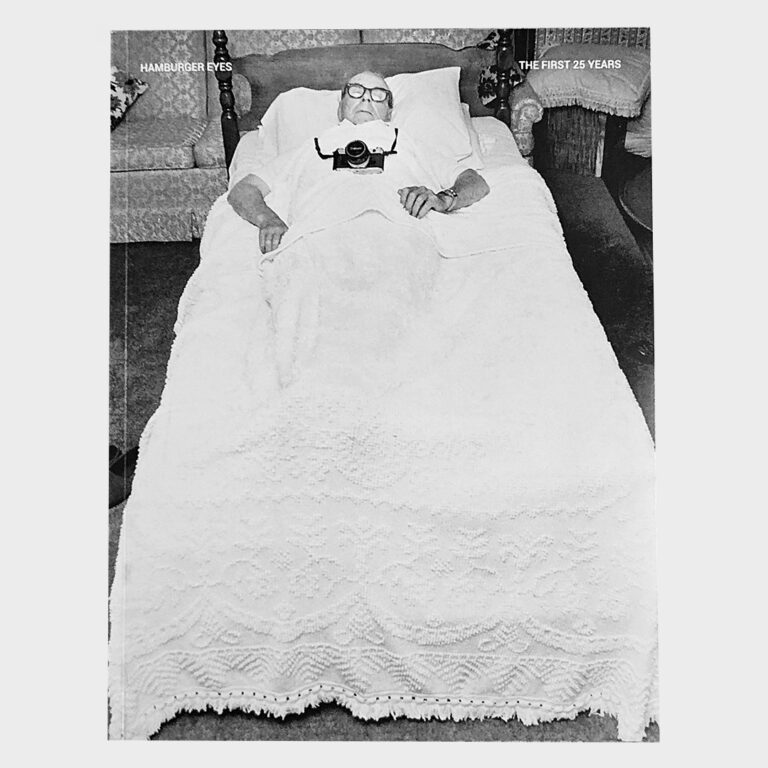
25 Years of Hamburger Eyes: SF's DIY Photo Zine Is Still Going
The San Francisco black-and-white photo zine turns 25 this year, with a 161-photographer anniversary book and a show at the SF Public Library. A quick look at what it is and why it's stuck around this long.
Read →
What Is Paris Photo, and Who Should Actually Go?
The world's largest photography fair returns to the Grand Palais this November. Here's what it actually is, who it's for, what tickets cost, and why the Paris Photo–Aperture PhotoBook Awards are worth planning your trip around.
Read →
Is a Dry Cabinet Worth It, or Just Gear Acquisition Syndrome With Extra Steps?
A photographer lost $3K in Sony lenses to fungus after a humid apartment and no protection. Reddit's r/AskPhotography is split on whether a dry cabinet is a real fix or an expensive shelf. Here's what the humidity numbers actually say, and why insurance won't bail you out either way.
Read →
Your Camera Cost $400 in 2014. It's Worth $2,500 Now. Does Your Insurer Know That?
Film cameras are appreciating assets now, not depreciating gear. Most insurance is built for the opposite. A real thread about insuring a Contax T3 and a Hasselblad 500CM shows what happens when the two collide, and what actually fixes it.
Read →