What Photographers Actually Paid When Gear Broke on the Job (and What Insurance Covered)
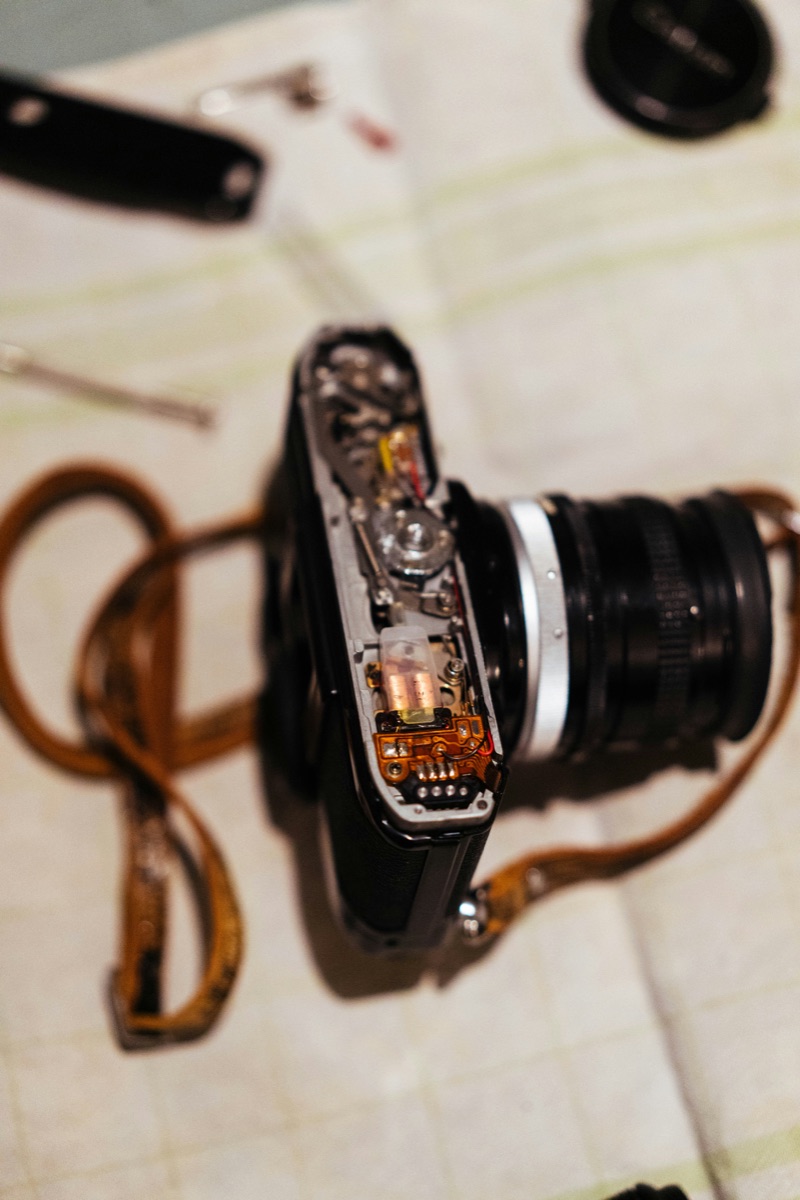
The question was simple: "What's the most expensive piece of gear you've had damaged on a job? Were you insured? What happened next?" It came from someone who works on the insurance side of small business, prompted by a wedding second-shooter whose lens fell off a chair during a reception. Autofocus started doing its own thing afterward. He didn't have the lens scheduled on a policy, so the repair came straight out of his pocket.
Forty-eight comments later, the thread had turned into something more useful than a vent session: a real, varied dataset of what actually happens when a camera hits the ground on a paid job. Bills ranged from a couple hundred dollars to a total loss north of $35,000, and whether insurance paid depended on details that had nothing to do with how expensive the gear was.
The Range: $600 to $35,000
Pull the dollar figures out of the thread and a pattern shows up fast. Most on-the-job damage lands in a fairly narrow band, a few hundred to a few thousand dollars, no matter how dramatic the story behind it sounds. The real outliers are rare, and they're rare specifically because they involve total loss, not a repairable part.
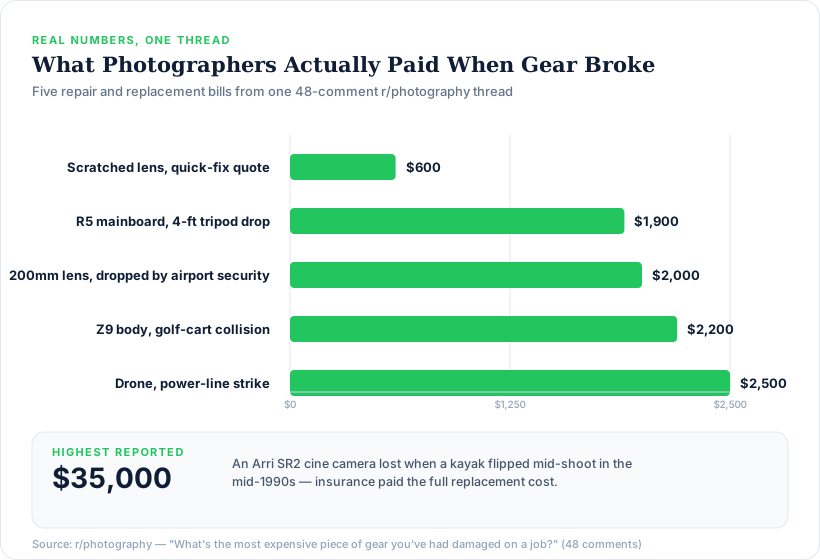
A Nikon Z9 body clipped by a golf cart at a race track came to a $2,200 repair that took six months. A drone that flew straight into a power line ran about $2,500 to fix. An R5 dropped four feet onto asphalt needed a new mainboard, about $1,900, after the LCD died on impact but the lens hood absorbed most of the fall. None of those are pocket change, but none of them are life-altering either, especially with coverage in place.
The scale-breaker is the $35,000 figure: an Arri SR2 cine camera, mounted to a kayak's foredeck for a 1990s bank commercial, that went underwater (still recording) when the kayak flipped. That's actual cash value from the mid-1990s, so the number would run higher today, but even at the time it was the kind of loss that would sink a small production company without insurance behind it. It's also a good reminder that repair costs and replacement costs live on completely different scales. Everything else on this list was a repair bill. The Arri was a write-off.
Currency and repair-versus-replace details matter too. One UK-based photographer sent a Sony lens in for a quote almost as a joke after it snapped in half falling down a flight of stairs, expecting a number close to buying new. The actual bill: about £230 for a full parts replacement, seals to screws. As he put it: "I was amazed on how cheap it was compared to the price of some stuff new." Not every damaged-gear story ends in a five-figure claim. Sometimes the scary-looking break is the cheap one.
When Insurance Pays Out Cleanly
The thread's best-case stories share a common thread: a dedicated gear policy, filed promptly, with no ambiguity about what happened.
One photographer had a camera and 24-70mm knocked off a table during bridal prep. The lens came back with an internal element knocked out of alignment, still usable but soft. His insurer covered the repair, but the outcome went further than that:
"Insurance covered the repair, but I ended up being sent a whole new lens as the distributor in my country wasn't happy with how accurate they could get the repair calibrated, so they gave me a new one instead."
He also had short-notice rental coverage built into his policy, meaning he wasn't stuck without a working lens while the claim processed. That's a detail worth noticing: a dedicated gear policy isn't just about the payout, it's about staying booked while the payout happens.
The Arri SR2 kayak story is the cleanest full-payout example in the thread, a $35,000 loss, fully covered, no drama in the retelling beyond the loss itself. And a Nikon D3 that started making a wrong shutter sound mid-football-game, no drop, no impact, just a mechanical failure, got a straightforward outcome too: the photographer swapped to a backup body, finished the game, called his agent Monday, and had a replacement check within a week.
When It Doesn't: Denials, Non-Renewals, and Paying It Yourself
The thread's harder stories are the more instructive ones, because the reasons coverage didn't come through weren't about the dollar amount.
The starkest is a safari guide's story, relayed secondhand, about a client attacked by a lioness on a walking safari. The guide threw his camera and lenses at the lion to help drive it off. The customer survived. The guide's insurance claim for the lost gear was denied:
"Their rationale was that he threw his gear away so it wasn't a valid loss claim."
The gear was gone either way. What determined the outcome wasn't the loss itself, it was how the policy's language defined "loss," and a deliberate act, even one made to save someone's life, didn't fit that definition.
Getting paid doesn't always mean staying insured, either. A photographer whose $2,500 drone needed parts after a crash got the repair covered, then got dropped by the insurer right after:
"$2500 drone, the insurance paid parts and I fixed it myself. They dropped me afterwards."
Another photographer described an entire disastrous week covering a European cycling race, roughly £15,000 in gear lost to a snapped camera harness, a camera that simply vanished off a moto mount, and a full car break-in that took everything down to his passport. Insurance paid all of it. The catch showed up at renewal: "the quotes next year were extortionate." Getting made whole and staying affordably insured turned out to be two separate problems.
Plenty of stories in the thread never involved an insurer at all, either by choice or by circumstance. A wind-blown tripod took out an FX3 and lens combo on an exposed parking structure roof; no policy was in place, so the repair came out of pocket. A wedding guest who borrowed a 5D Mark III to try some shots accidentally hit the lens-release button, dropping and destroying a 24-70mm L II; there was no claim to file because the guest's family paid for a replacement lens directly within three days. And in the bluntest story in the thread, airport security in Frankfurt pulled a brand-new $2,000 200mm lens out of a bag for inspection, dropped it on the inspection table and then the floor, said "oops," and walked off, with the photographer given no recourse and 25 minutes to make a flight.
Is Filing a Small Claim Even Worth It?
Not everyone in the thread was sold on filing in the first place. One blunt comment pushed back on the whole premise of the question:
"Why would you file a claim for a lens? Pay for the repair and or you should have enough of an emergency fund to replace if you're a professional. No way a claim is worth it to pay the deductible and then likely have your rate increase or be dropped."
That's not wrong as a rule of thumb, but it's not universal either. Whether a claim is worth filing comes down to the same math we've covered in more detail elsewhere: some insurers raise rates after any claim, some don't, and some policies specify that only fraud, nonpayment, or a terms violation can get you dropped, full stop. That's a policy-specific answer, not a universal one, so it's worth reading your own terms before assuming either way.
The £230 Sony repair from earlier is the practical argument for getting an actual quote before deciding anything. A snapped lens that looks like a write-off from across the room might come back from the manufacturer at a fraction of what a deductible would have cost to file against. Filing a claim on a repair that costs less than your deductible doesn't just fail to help, it can leave a claim on your record for a repair you were always going to pay for yourself.
What to Actually Do When Gear Breaks on a Job
- Get a real repair quote before deciding whether to file. A scratched barrel or a knocked-loose element can look catastrophic and cost far less than you'd expect, sometimes less than your deductible.
- Know your policy's stance on rate increases and non-renewal before you need it. Some insurers raise rates or drop policyholders after any claim; others explicitly don't. Read the actual terms, not the marketing page.
- If you're shopping for a dedicated gear policy, ask about short-notice rental or loaner coverage. A payout that arrives a week late doesn't help if you have a booking this weekend and no working lens.
- Document damage on-site when a third party is involved. A vendor, a guest, or a venue employee causing the damage changes who's responsible for it, and that's easier to establish in the moment than after the fact.
- Understand that "loss" has a narrower legal definition than you'd assume. Even a loss caused by genuinely justified circumstances, like throwing gear to defend against an animal attack, can fall outside what a policy defines as a covered loss if the act was deliberate rather than accidental.
None of these stories are hypothetical risk-management scenarios. They're what actually happened to 48 working and hobbyist photographers on ordinary jobs: a bridal suite, a race track, a parking structure roof, an airport security line. The gap between "covered in full" and "paid for it myself" rarely came down to how expensive the gear was. It came down to whether a policy existed, what it actually said about loss, and whether the photographer knew the terms before the moment they needed them. See our comparison table for standalone gear policies built around exactly this kind of on-the-job risk, or our full methodology for how we evaluate them.