What Actually Happens When Your Camera Gets Stolen and You Have No Insurance
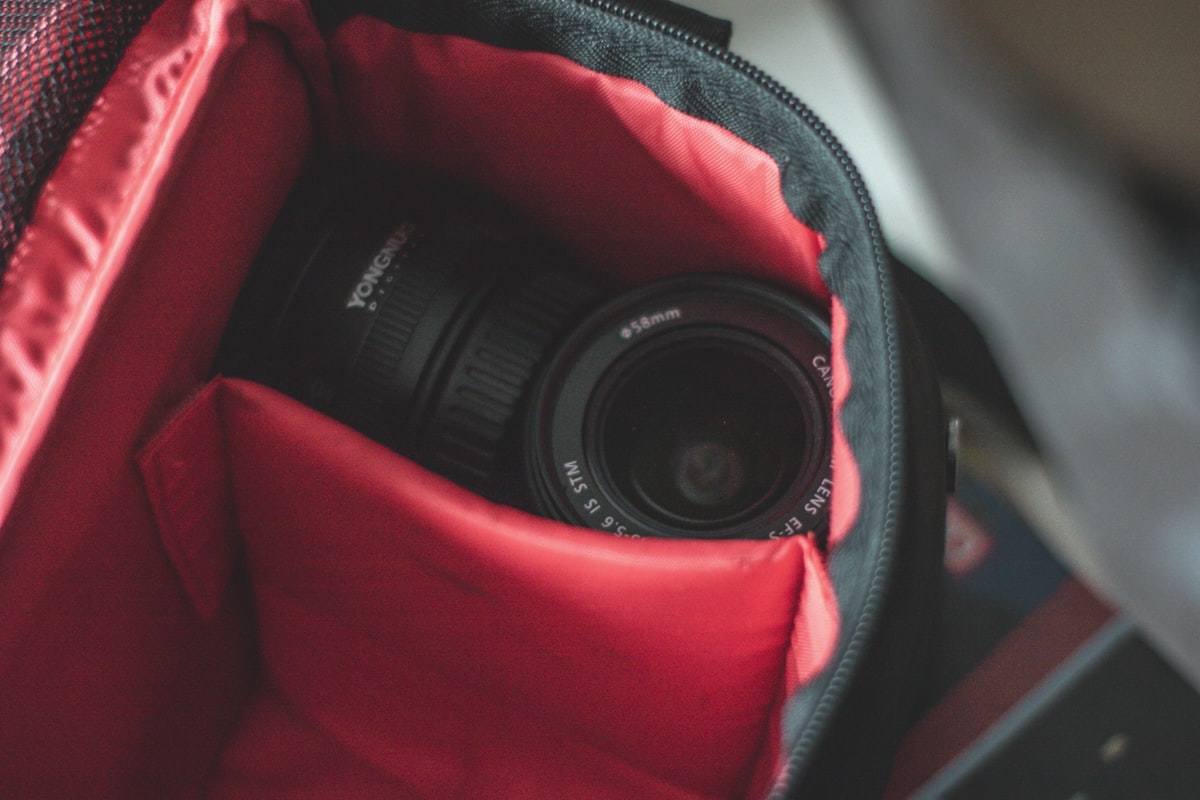
A photographer posting as She_didntt on r/photography described the moment plainly: her camera and main lens were stolen out of her car, and she didn't have insurance on her gear — "which I'm definitely kicking myself for now." She uses the camera to support her family. Further down the thread, after commenters pressed her on why there was no policy in place, the number landed with her in real time:
5k worth of gear just gone 😭😭
The thread that followed, 80 comments deep, is less a single cautionary tale than a cross-section of every way photographers assume they're covered until the moment they find out they aren't.
The Gap Between "I Have Insurance" and "I'm Covered"
The most useful thing about a thread like this isn't the theft itself — it's watching people work through their actual coverage in real time, and mostly finding gaps. When another commenter suggested checking her auto insurance, a credit card purchase protection, or a homeowners policy rider, She_didntt had already been down that road: her auto policy didn't cover it, she hadn't bought the gear on a card with purchase protection, and she didn't carry homeowners insurance at all. Three plausible-sounding safety nets, none of which existed for her specific situation. That's not unusual — it's the default. Auto insurance covers the vehicle, not the contents inside it, unless you've specifically added a rider for personal property. Credit card purchase protection typically only applies to a narrow window after purchase (often 90 to 120 days) and excludes plenty of loss scenarios. And renters/homeowners riders for camera gear are an add-on most people never think to ask for until after they need it. One commenter's reaction to the whole situation was blunter than most, and not wrong:
Not having insurance is the craziest decision of all time.
A second thread tells a related version of the same story from a different angle. A traveler (Tanoas_Ark, on r/photography) had a Sony a7II stolen a day into a trip to Tanzania, just before a Kilimanjaro climb. He did have travel insurance — but it capped electronics payouts at $800, nowhere close to replacing a mirrorless body and lenses. He ended up finishing the climb with a downgraded body bought locally, and more than a year later still hadn't fully replaced what he lost:
I still have my Sony a6000 but if I'm honest, it sits unused more than I would like... I just feel lost with where to go from here.
"Insurance" existed on paper; it just wasn't the right kind, at the right limit, for what actually happened. The lesson isn't "buy insurance" in the abstract — it's that generic policies (auto, travel, a basic renters plan) are built around someone else's risk profile, not a photographer's, and the sub-limits and exclusions only surface when you file a claim.
What Dedicated Coverage Actually Costs
The thread's most direct rebuttal to "insurance is expensive" came from a small business owner who didn't hedge at all:
I have over $12k covered for less than $600 a year, and it's more expensive for me because I'm a business. It's worth it.
The carrier he named, Hill & Usher, comes up repeatedly across photographer insurance discussions. Another commenter mentioned a State Farm Inland Marine policy running about $40 a month covering several thousand dollars in equipment — a specialty-policy structure built specifically to insure movable personal property like camera gear, separate from a standard homeowners policy. A third pointed to PPA membership, which bundles equipment and liability coverage into a professional membership rather than a standalone policy — worth comparing against a dedicated policy rather than assumed to be redundant with one.
None of those numbers are trivial, but set against what's actually at stake, they're not close to proportional. Elsewhere in the same thread, one photographer described two separate gear thefts — a $40,000+ NFL-shoot kit and a $27,000 backpack of bodies and lenses — both fully covered, with the insurer's payout letting him restock through a dealer and use a temporary credit line increase to avoid any real downtime. Another described a $65,000 loss from a break-in, also fully covered, with the payout large enough that he deliberately bought used gear to stretch it further. The contrast is the whole argument: a few hundred dollars a year standing between "replace everything by next week" and "start over from nothing."
The Fine Print Even Insured Photographers Miss
Coverage isn't binary, though, and a few details buried in the discussion are worth knowing before you assume a policy will behave the way you expect:
A payout isn't free money. One commenter who used a homeowners policy for a camera claim described it as functioning "more like a loan" — the resulting premium increase was enough to pay the insurer back the full claim amount over roughly four years. That doesn't make it a bad decision, but it changes the real cost calculation: the payout is real, and so is what you pay for it afterward.
Forced entry can be a hard requirement, not a technicality. One photographer described exactly this outcome after a theft from an Airbnb:
As we didn't find any signs of forced entry the insurance didn't pay. 5000€ gone.
That's a distinction that has nothing to do with whether the theft was real and everything to do with how the policy defines a qualifying loss. He specifically had to upgrade to a different policy afterward — for about €15 a year more — to close that gap.
A rider isn't automatically full replacement value. Several commenters described specialty riders priced per $1,000 of declared gear value, with the coverage only as good as the value you declared and kept current — which means the discipline of updating your policy after every new purchase matters as much as having the policy in the first place.
None of these are reasons to skip insurance. They're reasons to actually read what a specific policy promises — replacement value vs. depreciated value, forced-entry requirements, sub-limits on individual items — instead of treating "I have a policy" as a single, uniform fact.
If It's Already Happened and You Weren't Covered
Most of the advice aimed directly at She_didntt after the theft was blunt, but it clustered around a genuinely practical playbook for anyone in the same position right now, with no policy and a gap to fill:
- File a police report and record every serial number you still have documentation for — receipts, a spreadsheet, even old product-registration emails. Several commenters described gear eventually surfacing at pawn shops specifically because they'd kept serial numbers on hand to prove ownership.
- Check pawn shops, Facebook Marketplace, and local resale groups directly, not just once — stolen gear frequently resurfaces locally within days or weeks, faster than police departments typically prioritize a gear-theft case.
- Rebuild with used gear from a dealer with a return window (commenters specifically named MPB and KEH) rather than buying new, to get back to working condition faster without waiting to save the full replacement cost.
- Rent before you replace, if the gap is short-term and a paying job is on the calendar — several photographers described building rental costs into a shoot's price rather than financing a full replacement immediately.
- Treat this as the moment to fix the actual gap, not just the missing camera. The recurring, unglamorous advice across the thread wasn't "buy this specific policy" — it was "shop dedicated gear insurance now, because the version of you without coverage already found out what that costs."
The uncomfortable throughline in both threads isn't that these photographers were careless. It's that "I have insurance" turned out to mean an auto policy that excludes contents, a travel policy with an $800 electronics cap, or no policy at all — three different photographers, three different assumptions, one identical outcome. See our comparison table for how dedicated gear policies differ on exactly the limits and requirements that tripped people up here, or our full methodology for how we evaluate them.