Lending Your Camera to a Friend: What Your Policy Actually Covers If They Drop It
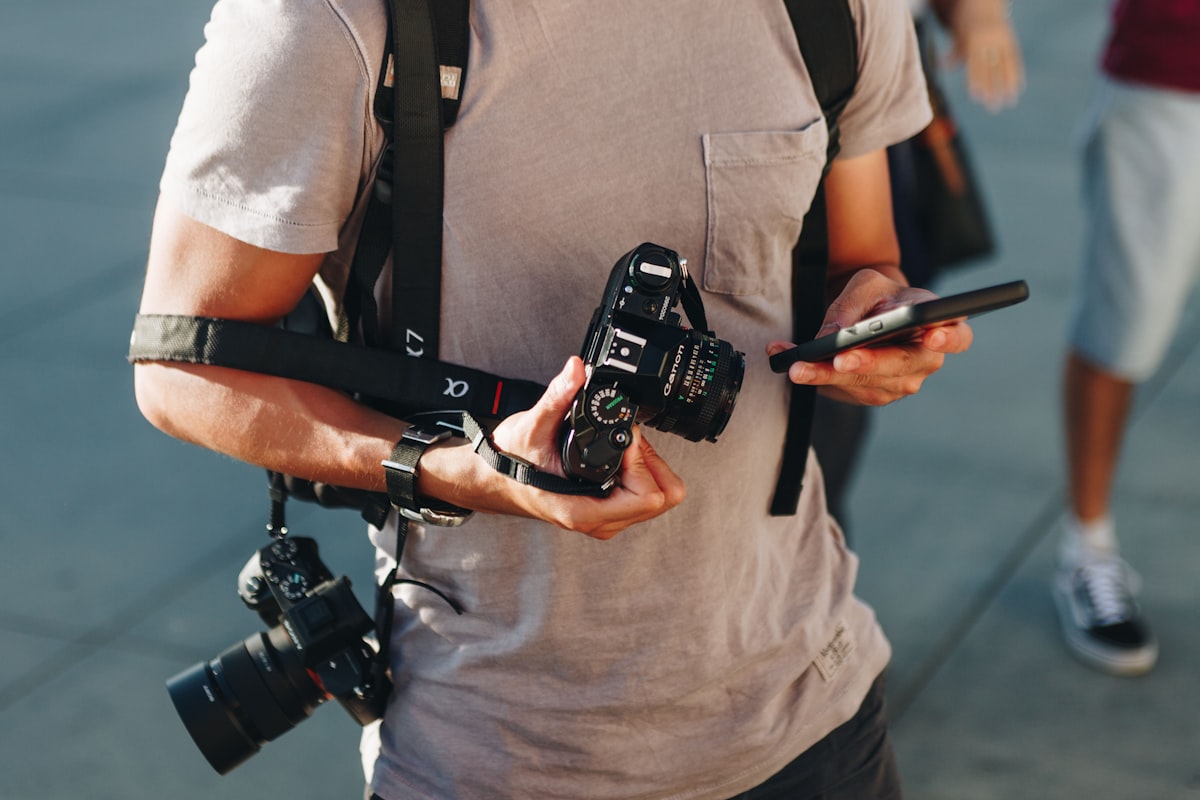
A videographer on r/videography asked a version of a question that turns out to be surprisingly common: they own a Sony FX3, insured through a bank's personal-property policy, and an experienced filmmaker friend wants to borrow it for a day. They're not worried about the friend's competence — they're worried about the paperwork. Does the policy still pay out if the camera gets damaged while someone else is holding it, or does coverage quietly stop the moment it leaves their hands?
A second thread, on the same subreddit, comes at it from the other side. Someone who regularly lends kit to a friend just starting out mentioned that friend buys her own one-day insurance policy every time she borrows, rather than leaning on the owner's coverage. Responsible caution, or overkill? Both threads circle the same unresolved gap: most people have no idea whose policy is actually on the hook once gear changes hands.
The Default Assumption Is Usually Wrong
Most people assume insurance follows the object — if the camera's insured, the camera's insured, full stop, regardless of who's holding it. That's not how the majority of personal camera policies (and homeowners/renters riders with a scheduled-property endorsement) are actually written.
Personal-lines policies are underwritten around a named insured — you, specifically — using or safeguarding a piece of scheduled property. The coverage is built on an assumption about who's exercising care over the item, not just who owns it. Some personal policies extend limited coverage to property temporarily in someone else's possession (a "loaned property" or "property of others" clause), but plenty don't mention it, and where it exists it's often capped well below the item's full value or excluded for anything beyond casual, short-term use. The FX3 owner in that first thread isn't being paranoid — a bank-issued personal-property policy is exactly the kind of product where this clause is easy to miss, because the sales conversation is about premiums and deductibles, not a friend borrowing the camera for a shoot.
Practically, that means the honest answer to "does my policy cover it while my friend has it" is: read the loaned-property language, or call and ask — not assume either way. The two outcomes look identical until something actually breaks.
Where Business Policies Do It Differently
This is the split that explains why working photographers and videographers who carry commercial coverage worry about this less. Many commercial equipment policies are written to cover gear in the care, custody, and control of the insured — meaning the policy follows the business's operational use of the equipment, regardless of which specific employee, contractor, or second shooter is physically holding it at the moment of a loss, within stated limits and exclusions.
That's a materially different structure than "the named insured must be the one using it." A production company handing a camera to a freelance shooter for a job is typically still within its own policy's coverage, because the equipment stays under the business's operational control. A personal policyholder handing the same camera to a friend for a favor usually isn't in that position — there's no "business operation" for coverage to attach to, just one person's named-insured status, which doesn't automatically extend to a second person's use. That's the structural reason this confusion keeps surfacing: the coverage model most people start with isn't built for the scenario that becomes common the moment gear starts moving between people.
The Two Gap-Fillers: Temp Policy and Loan Agreement
If a personal policy's loaned-property clause is thin, unclear, or absent, there are two straightforward ways to close the gap, and they solve slightly different problems.
A borrower's own temporary or one-day policy puts coverage on the person actually holding the gear for that window, independent of what the owner's policy does or doesn't say. This is what the friend in the second thread is doing, and it's not overkill — it sidesteps the "does my policy extend to a non-owner" question entirely by making the borrower their own named insured for the day. It's a small cost for a full transfer of risk, and it keeps the owner's claims history clean, since no claim ever touches the owner's policy.
A simple signed loan agreement solves a different problem: it doesn't create insurance coverage, but it creates clarity about who's financially responsible if something happens and neither policy pays out cleanly. A useful agreement notes the gear's condition at handoff (photos help), its current value, the loan period, and a plain statement of who's liable for damage or loss during that window — what keeps a friendship-damaging dispute from happening if a claim gets denied and someone has to eat the cost.
The two aren't mutually exclusive. A borrower with their own temp policy and a signed loan agreement has both the coverage and the paper trail — the strongest position for anything beyond casual use.
What a Real Loan Agreement Actually Covers
Search "camera equipment loan agreement" and there's a small industry of templates built for exactly this scenario — Etsy sellers and contract sites like Business-in-a-Box both offer fill-in-the-blank agreements aimed specifically at photographers loaning out gear. The terms they standardize around are consistent across listings: an itemized description of what's being loaned (serial numbers included, so there's no dispute later about which body or lens actually came back), the gear's current value, a specific loan period with a real return date instead of an open-ended "whenever," a note on condition at handoff (photos are the easiest way to document this), and a plain statement of who's on the hook if something is damaged, lost, or not returned on time. None of that requires a lawyer to draft — it just requires writing down, before the gear leaves the owner's hands, the things two friends tend to assume rather than actually say to each other.
That gap between assumption and agreement is the same thing that shows up when photographers debate lending gear in the abstract, not just when they're drafting paperwork for it. A DPReview thread asking whether people would let a friend borrow a lens landed on the same tension between friendship and money:
If you care about your friendship, then you will not lend him the lens.
Another reply in that thread was more conditional, tying the decision to how replaceable the gear was and whether it was needed for paid work:
If I know the friend will take care of it and replace it if there were an accident, sure, UNLESS, it was a lens I needed for a job. Work comes first. That means you can borrow the 50mm f/1.4. You can't borrow the tilt/shift lens I do product shots with.
Neither reply mentions a written agreement by name, but both describe the exact terms a formal one puts on paper: what happens if the gear breaks, and whether it's replaceable enough for the loan to be worth the risk. Writing it down doesn't resolve that tension — it just makes sure both people agreed to the same terms in advance, instead of finding out they didn't after something goes wrong.
When to Actually Worry About This
Not every loan needs a contract and a temp policy. The signal is a combination of duration, borrower experience, and gear value:
- Casual and low-stakes: a five-minute test shot, a quick "try this lens" handoff at a meetup, gear that's inexpensive to replace. Not worth formalizing — the odds and the dollar amount don't justify the friction.
- Get it in writing, or get temp coverage: a full day or longer, a borrower who's inexperienced with that specific gear, equipment worth enough that a loss would actually hurt, or the gear leaving your sight for an extended stretch. That's exactly the FX3-for-a-day situation in the first thread — experienced borrower or not, the duration and value cross the line where "we're friends, it'll be fine" isn't a real risk-transfer plan.
The rule of thumb: if you'd be upset enough about a loss to file a claim, treat the loan like it needs documentation and possibly its own coverage. If you'd shrug it off, it doesn't.
If You Lend Gear Regularly, There's a Third Option
A one-off loan agreement fits the FX3-for-a-day scenario. But the second source thread describes something different: someone who lends kit to the same friend repeatedly, over time, as she's starting out. For that kind of recurring relationship, re-negotiating trust and terms from scratch on every loan is more friction than either side probably wants.
Peer-to-peer gear-rental marketplaces exist to solve exactly that pattern, and they're worth knowing about even for photographers who'd never think to formally "rent" to a friend. Platforms like ShareGrid and KitSplit — built for renting equipment to strangers — bundle an owner-protection guarantee into every transaction. ShareGrid's Owner Guarantee covers listed gear up to $20,000 in value at no cost to the owner, targeting the risk informal lending has no real answer for: a borrower who simply never gives the gear back. As PetaPixel reported when both companies expanded their guarantees to that $20,000 figure, that outcome is rare but not hypothetical — KitSplit puts it at roughly 1 in 5,000 rentals, the kind of long-tail risk that's easy to wave off with a friend and hard to fully rule out with anyone. ShareGrid's CEO described the goal behind building that guarantee in:
Our goal has always been to make ShareGrid the safest way to rent your equipment to other people.
Running a recurring loan through a platform like this instead of an informal handoff gets an owner things an ad hoc arrangement doesn't: a paper trail of exactly what was loaned and when, a built-in guarantee against the worst-case outcome, and the option to buy additional short-term or annual insurance through the platform's partner insurer for damage beyond what the guarantee covers. It's overkill for a five-minute lens swap at a meetup. For someone who's effectively become their friend's unofficial gear library, it's a sturdier structure than re-litigating trust every time another borrow request comes in.
The Actual Fix Is Evaluating Coverage With This in Mind
The deeper issue both threads expose is that "camera insurance" isn't one product with one behavior — whether coverage follows the gear, follows the owner, or follows neither once a second person is holding it depends entirely on how a specific policy is written, and that detail rarely shows up until you go looking for it. When comparing providers, it's worth asking directly whether loaned-property or third-party-use situations are covered, and under what limits, rather than assuming a policy that's great on theft and accidental damage also handles lending by default.
See our comparison table for how providers we track handle this kind of detail, or our full methodology for how we evaluate them.